
The Role of the Family in the Fight Against Smoking
صدف سخاییFebruary 18, 2024اخبار
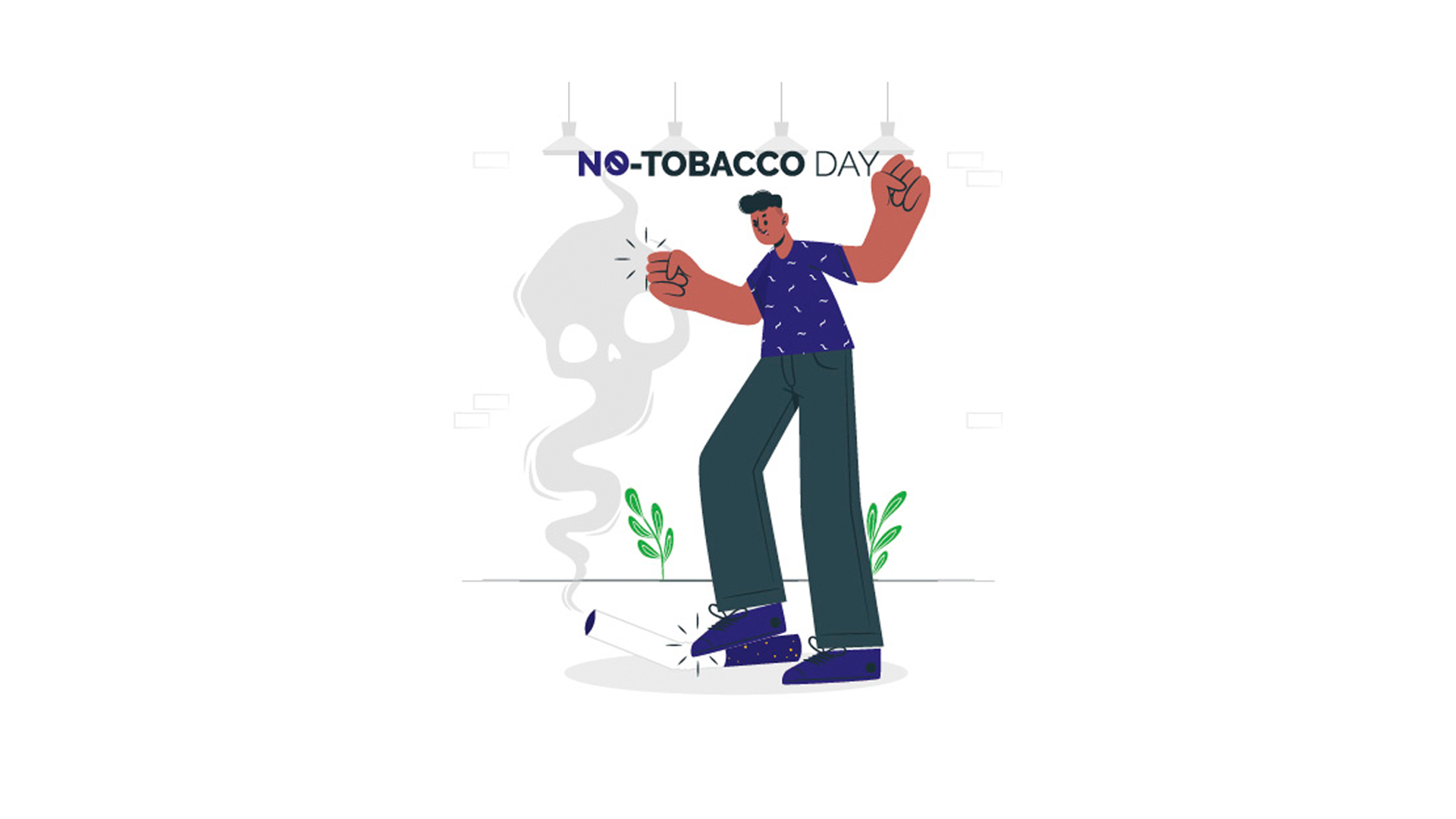
The effects of smoking on the body
Tobacco use is one of the most important causes of death throughout the world, and likewise in Iran. In our country, more than 70,000 deaths occur each year as a result of smoking. Cigarette smoke contains more than 4,000 harmful chemicals, the carcinogenicity of many of which has been proven. Tobacco use is a known cause of various cancers, cardiovascular diseases, strokes, complications of pregnancy, and chronic respiratory diseases. Cigarettes are addictive. Their addictiveness is recognized as being on a par with that of cocaine and heroin; moreover, dependence on cigarettes is both psychological and physical, and many people experience nicotine withdrawal symptoms during the quitting period, which are sometimes severe and, on occasion, extremely distressing, and this is usually the very cause of failure in the quitting process.
Among these symptoms—which vary greatly among different individuals according to physical condition and degree of dependence—the following can be mentioned:
headache, dizziness, anger, aggression, impatience, depression, anxiety, restlessness, sleep disturbance, body aches, leg pain, colicky abdominal pains (cramps), increased appetite and weight, and most importantly the temptation to use, etc.
Of course, it is possible for some of these effects to persist for a long time after quitting, but what is important is that many of them are easily controllable, and through consultation with a treating physician, a large number of them can be controlled using pharmacological and non-pharmacological treatment methods, increasing the chance of success in quitting.
How can we prevent relapse and a return to use?
The role of the family:
Treating nicotine dependence is very difficult and requires strong motivation and perseverance. Families should know that one third of smokers do not think about quitting at all, and of the remaining two thirds, only half are ready to quit, while the rest live in hesitation and indecision.
Just as the family can play a role in a person's inclination toward smoking, it also plays an important role in creating the motivation to quit in a smoking member of the family. Families should know that dependence on cigarettes, or any other addictive substance, is a multifaceted phenomenon with complex psychological-biological, social, and cultural dimensions. The causes of dependence and addiction are numerous, among which the following can be mentioned:
A: Biological causes B: Social causes
Biological causes consist of individual and interpersonal causes. Individual causes in turn encompass the personality and psychological characteristics of the individual.
Among interpersonal causes, one can point to the circle of friends and, most importantly of all, the family. Among influential social causes, one can name the conditions of the place of residence or the availability of substances in society.
Do you know in which families the likelihood of becoming a smoker is greater?
1/ In families where smoking is not an anti-value and is regarded as a sign of personal prominence, and where there is no resistance to smoking.
2/ Families that give their children boundless freedoms.
3/ Families in which there is no atmosphere of dialogue and the expression of affection and attachment.
4/ Families in which frequent conversations take the form of bickering and harsh behavior in the form of aggression between the parents, and in which children are subjected to repeated reproach, humiliation, and labeling.
5/ Families dominated by emotional instability.
6/ Families in which commitment to spiritual values and religious beliefs is weak.
7/ Families in which the psychological and material needs of individuals are not adequately met.
8/ Families that have impenetrable structures and decide everyone's fate, denying members the right to speak, the right to vote, and the right to be involved in family affairs.
9/ Families whose members lack the skills necessary to cope with the problems and challenges ahead.
10/ Families in which there are smokers, or who have contact with smokers, and in which there is in some sense no negative attitude toward smoking among family members.
Let us remember:
The family should be the place and starting point for the expression of human emotions and the center of the most intimate interpersonal relationships and interactions, and the conditions of the home should also be such that family members reproach and lecture one another less and listen to one another more, and adopt solution-oriented approaches.
Conditions of a healthy family:
The home should be a safe haven full of peace, so that emotional bonds and affectionate attachments between parents and children take shape. Reducing the scope of disputes and quarrels and providing mental and physical peace for the children can, while ensuring peace of mind among family members, also foster affection for the family circle.
Parents are obligated to:
1/ Be a suitable behavioral role model for their children.
2/ Recognize the interests and needs of family members.
3/ Establish appropriate verbal communication with the members.
4/ Observe justice and fairness in their behavior and actions.
5/ Respect the rules and rights of others in the home and family.
6/ By providing a flexible model, raise the level and capacity for accepting criticism and change within the family.
7/ Convey social, cultural, and religious points within the family.
8/ Create empathy on personal, social, economic, cultural, and political matters.
9/ Create joy and happiness in the home and family.
10/ Pay attention to the health and well-being of the children and all family members—neither absolute permissiveness nor a despotic family, but rather a family that, far from any excess or neglect, dedicates itself to raising its children.
A healthy family
is one in which love and affection exist among family members—neither absolute permissiveness nor a despotic family, but rather a family that, far from any excess or neglect, dedicates itself to raising its children.
Let us bear in mind
The family is a system in which the individuals are interdependent and their behaviors completely affect one another. Children are considered the embodiment of the engineering of our thoughts and deeds, and the architecture of a stable family can be discerned from the behavior and thoughts of that family's children.
The role of women and mothers in the family in confronting cigarette use by family members: Women, as mothers or wives, can play an important role in the family in preventing an inclination toward smoking or in quitting smoking.
First, the wife or mother of the family must know what effects smoking has on the body and mind of the smoker; in addition, she must be able—by establishing a suitable context for conveying related health messages in the form of expressing the family's expectations about not smoking—to make the family environment unfavorable for smoking.
The mother of the family can, by writing health messages related to the harms of smoking on beautiful paper or even in simple frames and posting them in places visible to family members, create opportunities for each family member to reflect on the harms of smoking (a sample of such messages is included in the appendix section of this self-help guide).
Women, as mothers of the family, play an important role in preventing their children from being exposed to others' cigarette smoke, and obviously, in the case of pregnancy, the importance of not smoking or being exposed to others' cigarette smoke for the health, growth, and development of the fetus makes the responsibility and role of women all the more clear.
One to three percent of women (over 15 years old) in our country are smokers, and this is while women's influence on and within the family—both in preventing smoking in the family and in undertaking to quit—is greater than that of men. Women, given their familiarity with the moods and temperaments of their family members, can suggest suitable strategies for creating the motivation to quit in a smoking family member.
Women, given their familiarity with the characteristics of family members, can, by identifying the conditions that trigger smoking, greatly limit the opportunities for it. Women can, through the proper management of relationships within the family, bring about calm in the home environment and minimize the conditions that create psychological pressure, especially during the quitting period.
Women can, in communication with the physician providing the cessation service, by providing the necessary information about the smoker's condition, provide more suitable support for the person who has undertaken to quit and increase the chance of success in quitting.
Women can, by overseeing the dietary pattern of the person who has undertaken to quit, help correct many of the disorders that arose during the period of use.
Women can, by monitoring the correct use of the medications recommended by the physician, or the smoker's performance with respect to the physician's recommendations, increase the chance of success in quitting. Women are the standard-bearers in the fight against smoking in the family.
If you have a smoker at home who has decided to quit, know that a special opportunity has been given to the family members. So, while welcoming the decision that has been made, keep the following in mind:
First, you must know that the family is a system whose individuals are interdependent and whose behaviors are completely effective and influential upon one another.
When you consider a smoker dependent on nicotine as one of the components of this system, you must know—and make clear to the other family members—that the behaviors and relationships of the other components of this system must also change with respect to that component. This is because years of smoking have, in a sense, thrown the family out of its necessary balance and order. Therefore, for this component to want to correct its behavior, the prior order governing the family is in a sense disrupted, and it is necessary for the other family members to undergo some changes in their behaviors and conduct. We must keep in mind that any unrefined and hasty action can have negative consequences.
Another important matter is that the degree of a person's emotional attachment to those around them can be the most important and most prominent factor in quitting smoking. Of course, given people's various circumstances, the factors that create the motivation to quit can differ greatly among different individuals, even among members of the same family. Many people who quit smoking do so out of fear and apprehension that their children or spouse will become addicted to cigarettes. Sometimes smokers quit at the birth of a child to prevent harm to the children. On some occasions, matters such as marriage, or a future spouse's condition for continuing the relationship, play a role in quitting smoking.
Identifying the important factors that give rise to the thought of attempting to quit, and ultimately the smoking family member's putting the decision to quit into action, will give you the opportunity to determine the focus of your recommendations and actions, and to step in to support the smoker through the quitting process with an open mind and to guide them.
Let us remember that the family's encouragement and motivation will be of considerable help in improving the person's behavior. Treating cigarette dependence is not easy. It requires perseverance and demands the sincere cooperation of the family; moreover, attempting to quit and remaining quit requires high motivation, and for the person to participate well in the treatment stages, having a supportive person can be very effective.
When a person becomes hesitant—this is where the family must help, and it is not even necessary for the attempt to quit and undergo treatment to be entirely voluntary; some pressure should be applied by the family so that the smoker knows that those around them want them to be treated. Establishing communication and expressing the family's expectations about family members not smoking can play an important role in preventing use or in attempting to quit.
When a person addicted to cigarettes decides to quit, whether of their own accord or through the family's insistence and encouragement, they in a sense enter a stage of treatment, and what is important is that the family's approach toward them must be different from the approach during the period of use.
The family's duties toward a person who has decided to quit:
1/ With the agreement of the smoker and the other family members, designate one day as the "quit day."
2/ Arrange a program and celebrate the quit day, and inform other relatives and close friends about the smoking member's attempt to quit.
3/ Identify the triggers for resuming smoking, based on your knowledge of the smoking family member.
4/ Create the conditions for staying away from and avoiding encounters with these triggers as much as possible.
5/ Repeatedly remind them of the benefits of quitting.
6/ Express your own and each family member's satisfaction and happiness regarding the smoking member's attempt to quit, and mention it repeatedly.
7/ Remember to avoid any harsh treatment of the smoker, or any indifference and neglect, during the quitting period.
8/ Devise a new and suitable meal plan, taking into account their preferences, for the smoking member who has undertaken to quit.
9/ Plan group gatherings of family members and, by engaging in group recreational activities such as group walks, mental games, or other activities that family members enjoy, limit as much as possible the opportunities for preoccupation with the thought of smoking.
10/ During the quitting crisis, especially the first 4 weeks, refrain from associating with smoking friends or acquaintances.
11/ Calculate the money that was not spent on buying cigarettes as a result of quitting, and with that amount and the agreement of the other family members, provide one of the family's necessities.
12/ Family members should know that during the quitting period, especially the first weeks, the person is extremely irritable and needs a great deal of emotional support.
13/ Always keep in mind that during the first days of quitting, the person is in a state where the possibility of returning to the past is stronger than the brain's ability to make decisions for the future.
14/ Each and every family member must help the person who has undertaken to quit so that they can more easily endure the nicotine withdrawal symptoms and emerge from this test with their head held high.
15/ Families should know that it is possible for the person, without wanting to, to be reminded of the period of use, and this recollection is in fact a physiological reaction in the person's body.
16/ Families should, with an open mind, ask the smoking member who has undertaken to quit to express their feelings during these recollections of the past, so that the other members can, by identifying the triggers for resuming use, strive to eliminate them and in a sense prevent relapse and a return to use.
17/ Families should not have excessive expectations during the quitting period of a person who has undertaken to quit smoking.
18/ Family members should know that too much joy, excessive sadness, family pressures, or too much work can be dangerous for a person who has just quit.
19/ The family's oversight of the social interactions and behavior of the newly quit member will play an important role in keeping them in lasting avoidance of and abstinence from resuming use.
20/ Families should know that in the first days of quitting, the person may become restless, irritable, and fault-finding, or may experience sleep disturbances. Therefore, being prepared to face these conditions can be very helpful.
21/ Most importantly, families should know that dependence on and addiction to nicotine or other illicit substances is a chronic phenomenon, and the possibility of relapse and slipping will exist for a long time. But what is certain is that as the duration of being clean increases and the person learns ways to cope with slips, they gradually become stronger against temptations and show more appropriate reactions.
Health messages regarding cigarettes and the harms of using tobacco products:
1/ Cigarette smoke contains more than 4,000 harmful toxic substances.
2/ Smoking takes the lives of more than 5 million people worldwide each year.
3/ It is predicted that within the next 20 years (by the year 2030), tobacco use will be the largest cause of death in the world.
4/ Currently, every 6 seconds one person loses their life as a result of smoking.
5/ If the current trend of smoking continues, within the next 10 years one person will lose their life as a result of smoking every 3 seconds.
6/ The average reduction in lifespan for smokers is 8 years, and for those who die in middle age it is 22 years.
7/ In Iran, 70,000 deaths occur each year as a result of smoking.
8/ Smoking is one of the most important factors causing heart attacks and strokes.
9/ Smoking causes the walls of the arteries to harden.
10/ Smoking causes an increase in dangerous fats in the blood.
11/ At all ages, smokers are 10 to 15 times more at risk of a heart attack than non-smokers.
12/ Nicotine is the addictive poison of cigarettes.
13/ The addictiveness of cigarettes is recognized as being on a par with that of heroin and cocaine.
14/ Dependence on nicotine is both physical and psychological.
15/ Physical and psychological dependence on cigarettes sometimes makes quitting difficult.
16/ The nicotine withdrawal symptoms that arise during the quitting period, and that are sometimes more severe in the first weeks of quitting, are among the most important causes of failure in quitting smoking.
17/ Nicotine withdrawal symptoms vary greatly among different individuals depending on physical condition or the degree of nicotine dependence.
18/ Learning how to cope with nicotine withdrawal symptoms helps with successful quitting.
19/ Smoking prevents the absorption of calcium in the body.
20/ Cigarette smoke is one of the important causes of premature wrinkles and possibly the premature graying and aging of hair.
21/ Smoking is an important factor in sexual impotence.
22/ Smoking reduces reproductive function in both women and men.
23/ Smoking causes an increased heart rate and high blood pressure.
24/ The percentage of death from stroke is higher in smokers and increases with the number of cigarettes consumed.
25/ The likelihood of the children of smokers becoming smokers is greater than that of the children of non-smokers.
26/ Smoking any number of cigarettes, even one, is harmful.
27/ The risk of developing cancer in smokers is much higher than in non-smokers.
28/ The risk of pancreatic cancer in men who smoke 20 cigarettes a day is 5 times that of non-smokers, and for women it is 6 times greater.
29/ Male smokers are 70 percent and female smokers 40 percent more likely to develop bladder and kidney cancer.
30/ The risk of cervical cancer in female smokers is twice that of non-smoking women.
31/ The risk of cancer of the mouth, larynx, and throat in heavy smokers is 20 to 30 times greater than in non-smokers.
32/ People who smoke 20 cigarettes a day have a twofold risk of developing cataracts.
33/ The risk of degeneration of the visual cells, which is a common cause of blindness in middle-aged people, is 2 to 5 times more prevalent in smokers.
34/ Gum infections and tooth loss are more common in smokers.
35/ Pain, premenstrual pressures, and irregular and absent menstruation are much more common in female smokers.
36/ Women who smoke are more prone to developing osteoporosis and have a higher risk of fractures of the hip and other bones.
37/ Menopause occurs 2 to 3 years earlier in smokers.
38/ People who are not themselves smokers but are exposed to others' cigarette smoke are called secondhand or passive smokers and are exposed to the various diseases caused by smoking.
Comments
No comments yet.
To leave a comment, please sign in.