
Introducing the Book "Guide to Implementing a Process Safety Management System (PSM)"
شکیلا بختیاریDecember 1, 2018تازه های نشر
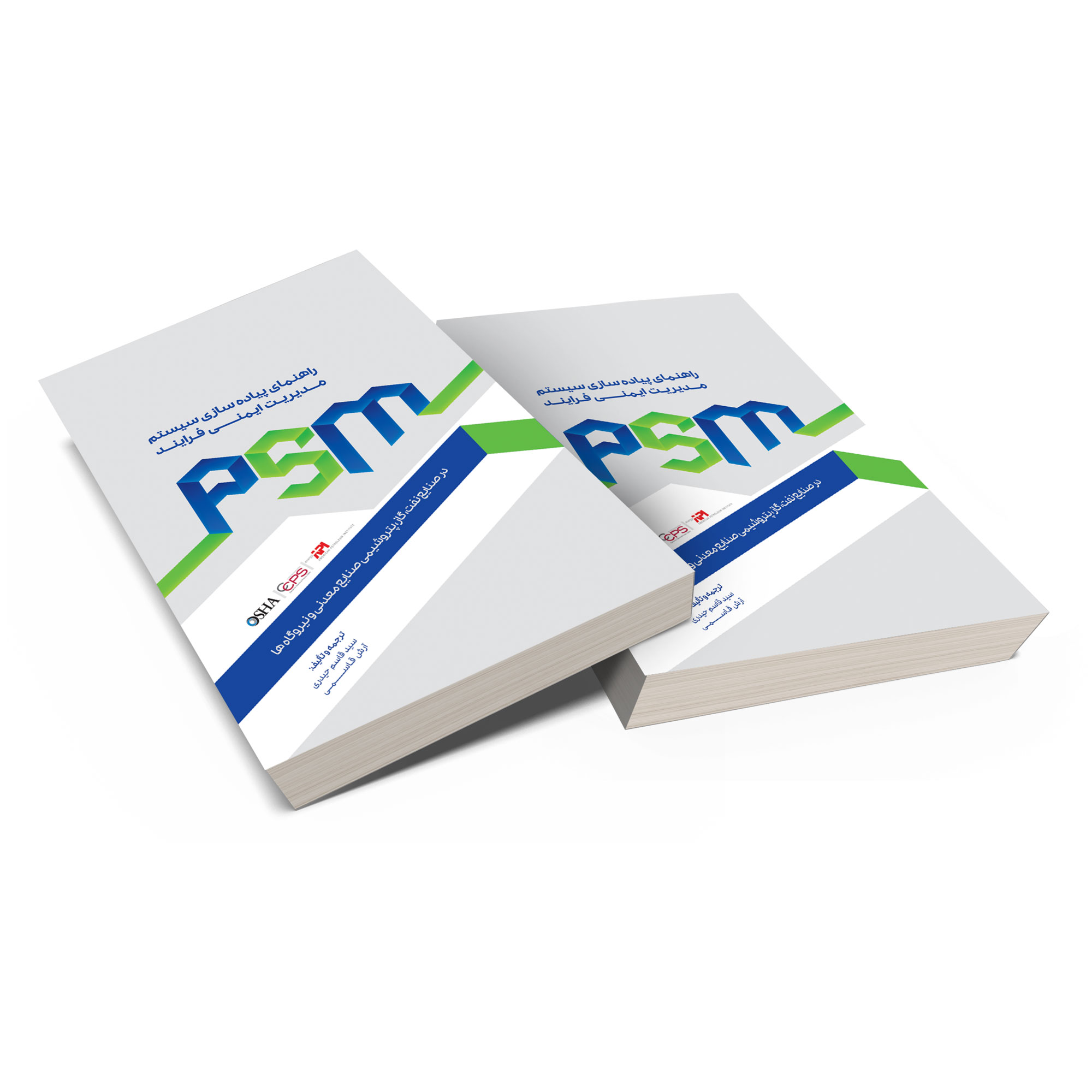
One of the subjects that has received less attention in the field of safety engineering and in academic texts in our country is the safety of processes and equipment.
In recent years, this matter has, from a theoretical state, turned into a practical necessity, especially among CEOs, managers of complexes and power plants, managers, heads, and safety and HSE experts.
The author's practical experiences in the field of oil refining, petrochemical, and chemical industries created this necessity, so that, among a multitude of various books in the field of HSE, the present book—as a practical collection of safety principles in process industries such as oil, gas, petrochemicals, power plants, and chemical industries—was deemed noteworthy and was translated, compiled, and authored.
The main objective envisaged in authoring this book is for esteemed readers, while becoming familiar with the principles of process safety management, also to learn how to implement it in the process industries over a period of several years, so that, God willing, we may witness a maximal reduction of human accidents as well as incidents and technical trips at the level of the aforementioned industries throughout the country.
This book consists of three main chapters.
[caption id="attachment_4220" align="aligncenter" width="405"]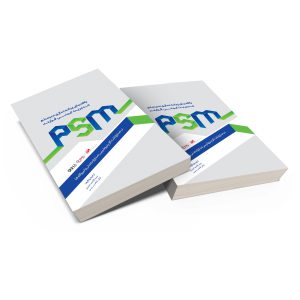
"Process Safety Management, PSM"[/caption] In the first chapter, an introduction to process safety management and the history of its creation, as well as a review of how some major process accidents occurred and their connection to the subject of PSM, is presented. Continuing this chapter, the various prominent PSM models in the world are introduced. In the second chapter, a brief introduction to and description of the provisions of the elements of the process safety management standard, in accordance with OSHA's 14-element model, is addressed. Also, given the strong reception by many industries within the country, and especially petrochemical companies, of the model presented by the CCPS, this center's requirements are cited in the elements shared with the OSHA model, and the other elements specific to this PSM model are introduced in separate discussions and sections. In the third chapter, for the purpose of planning and implementing each of these elements according to the nature of each of the process industries, experience-based guides are presented, so that esteemed readers can, by determining a road map and timetable, implement this management system at the level of their own complexes. Given that it is not possible to fully describe all the requirements and details of implementing each of the elements of this system in a single book, the authors are compiling separate, specialized books and booklets on each of the elements of the process safety management system, which esteemed readers can use for the purpose of learning the details of planning and implementing PSM. In light of the aforementioned subjects, studying this book is recommended for all engineers and specialists in fields related to safety engineering, chemical and process engineering, mechanical engineering, industrial hygiene engineering, industrial engineering, and environmental engineering, as well as all managers and engineers working in the oil, gas, petrochemical, power-plant, pharmaceutical, paper-making, mineral, and other chemical industries. https://irannashr.com/main/product/%d8%b1%d8%a7%d9%87%d9%86%d9%85%d8%a7%db%8c-%d9%be%db%8c%d8%a7%d8%af%d9%87-%d8%b3%d8%a7%d8%b2%db%8c-%d8%b3%db%8c%d8%b3%d8%aa%d9%85-%d9%85%d8%af%db%8c%d8%b1%db%8c%d8%aa/
"Process Safety Management, PSM"[/caption] In the first chapter, an introduction to process safety management and the history of its creation, as well as a review of how some major process accidents occurred and their connection to the subject of PSM, is presented. Continuing this chapter, the various prominent PSM models in the world are introduced. In the second chapter, a brief introduction to and description of the provisions of the elements of the process safety management standard, in accordance with OSHA's 14-element model, is addressed. Also, given the strong reception by many industries within the country, and especially petrochemical companies, of the model presented by the CCPS, this center's requirements are cited in the elements shared with the OSHA model, and the other elements specific to this PSM model are introduced in separate discussions and sections. In the third chapter, for the purpose of planning and implementing each of these elements according to the nature of each of the process industries, experience-based guides are presented, so that esteemed readers can, by determining a road map and timetable, implement this management system at the level of their own complexes. Given that it is not possible to fully describe all the requirements and details of implementing each of the elements of this system in a single book, the authors are compiling separate, specialized books and booklets on each of the elements of the process safety management system, which esteemed readers can use for the purpose of learning the details of planning and implementing PSM. In light of the aforementioned subjects, studying this book is recommended for all engineers and specialists in fields related to safety engineering, chemical and process engineering, mechanical engineering, industrial hygiene engineering, industrial engineering, and environmental engineering, as well as all managers and engineers working in the oil, gas, petrochemical, power-plant, pharmaceutical, paper-making, mineral, and other chemical industries. https://irannashr.com/main/product/%d8%b1%d8%a7%d9%87%d9%86%d9%85%d8%a7%db%8c-%d9%be%db%8c%d8%a7%d8%af%d9%87-%d8%b3%d8%a7%d8%b2%db%8c-%d8%b3%db%8c%d8%b3%d8%aa%d9%85-%d9%85%d8%af%db%8c%d8%b1%db%8c%d8%aa/
Comments
No comments yet.
To leave a comment, please sign in.