
Book Review: Occupational Safety in Mines
شکیلا بختیاریSeptember 1, 2022تازه های نشر
Human history shows that, from the dawn of the ages of life, humankind has always, owing to its various needs, been connected in some way with natural reserves and mines.
Flint (silicon dioxide) is the first material humans became aware of, and they used it, because of its serrated property, as a cutting tool. As civilizations advanced, metals too drew human attention and use.
Gold is the first metal that was extracted by washing river sand, and after it copper and iron were extracted from the depths of the earth to make military and agricultural tools.
Archaeological evidence shows that the cradle of metal extraction by humankind was the Iranian Plateau and the Anatolian Plateau.
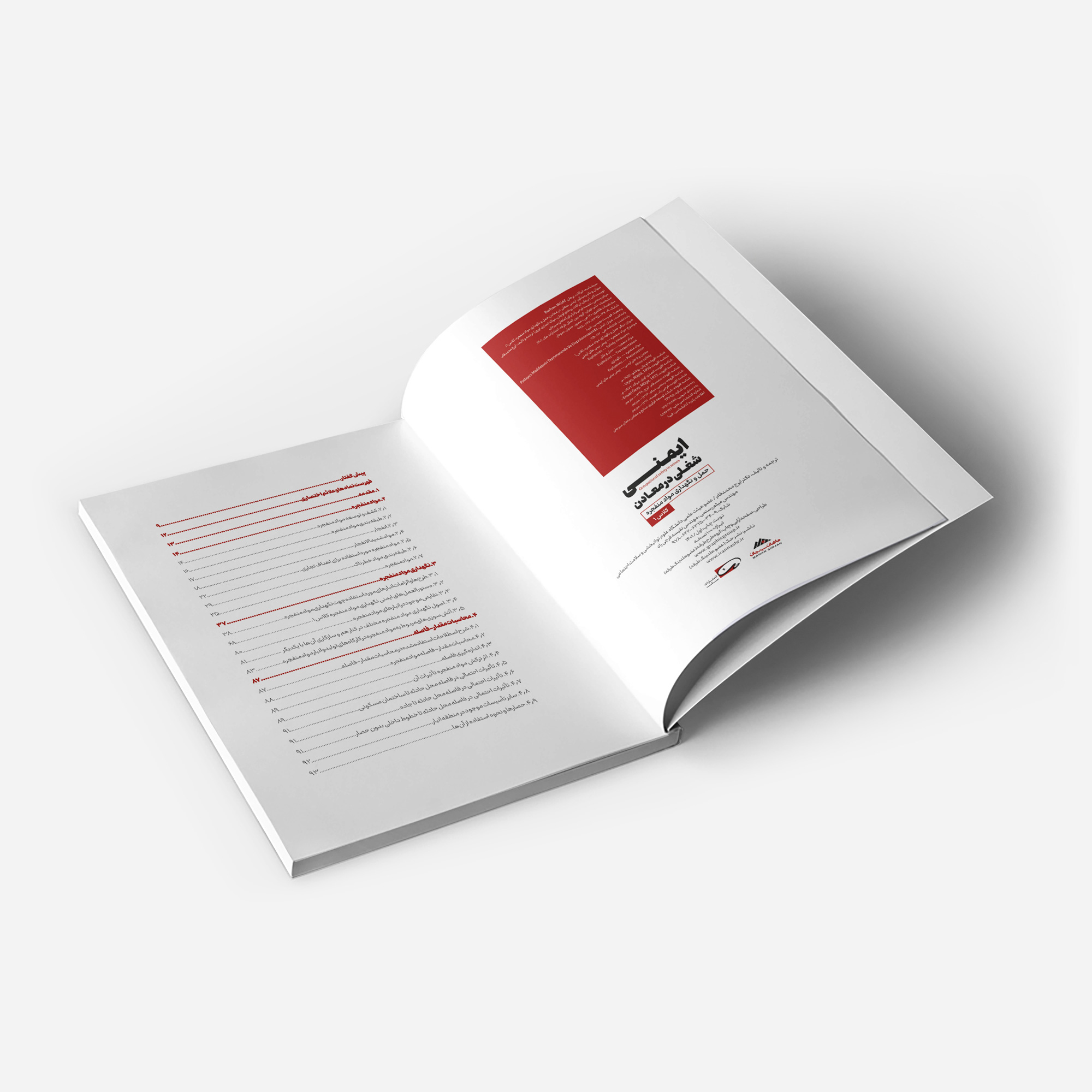
[caption id="attachment_3759" align="aligncenter" width="425"] "Transport and Storage of Class 1 Explosives"[/caption]
The historical span of this evidence ranges from the seventh millennium BC (the Neolithic period) to the first millennium BC (the Iron Age). The background of sedentary settlement in the form of villages with farming as an occupation on the Iranian Plateau dates back to the Neolithic period (from 4000 to 8500 years BC), and the earliest discoveries relating to the use of metals also belong to this period, to around 6500 years BC, at Ali Kosh in the Dehloran Plain.
Iranians have long been able to extract and smelt metals by various methods; ancient mining is called "Shaddadi" mining. The most primitive method in Shaddadi mining was carried out by lighting fires to heat the rocks and then cooling them in order to create cracks, and finally by striking the seams with a wedge and sledgehammer.
At present, a major part of this method has given way to the use of explosives.
Explosives are the most reliable tool for breaking rock, because they possess the power needed to break it and are applicable in all conditions, such as tunneling, breaking rock underwater, creating a narrow or wide passage in rock, and the like.
The art of explosives is that they release their energy in a very short time, and for this reason they are able to break any kind of rock.
Among the most important characteristics of explosives that have made them a practical tool in mining are their high speed in performing the task, high safety, suitable price, and the possibility of easily transporting them to the places of use.
According to the latest results announced by the Statistical Center of Iran, the total number of mines in the country in the year 1400 (2021) was 10,170, of which 6,861 were active mines and 3,309 inactive.
The number of those employed in the country's operating mines in 1397 (2018) was estimated at around one hundred thousand. Also, the investment value of the country's operating mines in 1397 was estimated at 19,476,266 million rials.
The amount of explosives in each country can be an indicator for assessing the quantity of that country's development programs.
There are no precise statistics on the annual consumption of industrial explosives in the world, but according to some existing figures, the amount of explosives consumed annually in the world for construction works and mineral extraction is estimated at around 8 million tons.
The annual consumption of industrial explosives in Iran is estimated at around 30,000 tons. In proportion to its area, and in comparison with other countries, explosive consumption in Iran is low.
In light of the above, addressing safety issues in the use of explosives in mining activities is an undeniable necessity. In this regard, and given the proximity and very many points in common between the two neighboring countries—Iran and Turkey—in terms of geographical characteristics as well as the general culture of the people and, consequently, the safety culture of the workforce, and the possibility of drawing on the experience of Turkish mine-safety specialists, the present book is based on a translation of the book:
Patlayıcı Maddelerin Taşınmasında ve Depolanmasında Iş Güvenlığı Uygulamaları: Sınıf 1 Tip
Since a considerable part of the present book refers to and cites the relevant Turkish laws in the field of mine safety, in translating it an effort has been made to replace them with the equivalent Iranian provisions so that the book is easier to use for Iranian readers interested in it.
https://irannashr.com/main/product/%d8%a7%db%8c%d9%85%d9%86%db%8c-%d8%b4%d8%ba%d9%84%db%8c-%d8%af%d8%b1-%d9%85%d8%b9%d8%a7%d8%af%d9%86/
"Transport and Storage of Class 1 Explosives"[/caption]
The historical span of this evidence ranges from the seventh millennium BC (the Neolithic period) to the first millennium BC (the Iron Age). The background of sedentary settlement in the form of villages with farming as an occupation on the Iranian Plateau dates back to the Neolithic period (from 4000 to 8500 years BC), and the earliest discoveries relating to the use of metals also belong to this period, to around 6500 years BC, at Ali Kosh in the Dehloran Plain.
Iranians have long been able to extract and smelt metals by various methods; ancient mining is called "Shaddadi" mining. The most primitive method in Shaddadi mining was carried out by lighting fires to heat the rocks and then cooling them in order to create cracks, and finally by striking the seams with a wedge and sledgehammer.
At present, a major part of this method has given way to the use of explosives.
Explosives are the most reliable tool for breaking rock, because they possess the power needed to break it and are applicable in all conditions, such as tunneling, breaking rock underwater, creating a narrow or wide passage in rock, and the like.
The art of explosives is that they release their energy in a very short time, and for this reason they are able to break any kind of rock.
Among the most important characteristics of explosives that have made them a practical tool in mining are their high speed in performing the task, high safety, suitable price, and the possibility of easily transporting them to the places of use.
According to the latest results announced by the Statistical Center of Iran, the total number of mines in the country in the year 1400 (2021) was 10,170, of which 6,861 were active mines and 3,309 inactive.
The number of those employed in the country's operating mines in 1397 (2018) was estimated at around one hundred thousand. Also, the investment value of the country's operating mines in 1397 was estimated at 19,476,266 million rials.
The amount of explosives in each country can be an indicator for assessing the quantity of that country's development programs.
There are no precise statistics on the annual consumption of industrial explosives in the world, but according to some existing figures, the amount of explosives consumed annually in the world for construction works and mineral extraction is estimated at around 8 million tons.
The annual consumption of industrial explosives in Iran is estimated at around 30,000 tons. In proportion to its area, and in comparison with other countries, explosive consumption in Iran is low.
In light of the above, addressing safety issues in the use of explosives in mining activities is an undeniable necessity. In this regard, and given the proximity and very many points in common between the two neighboring countries—Iran and Turkey—in terms of geographical characteristics as well as the general culture of the people and, consequently, the safety culture of the workforce, and the possibility of drawing on the experience of Turkish mine-safety specialists, the present book is based on a translation of the book:
Patlayıcı Maddelerin Taşınmasında ve Depolanmasında Iş Güvenlığı Uygulamaları: Sınıf 1 Tip
Since a considerable part of the present book refers to and cites the relevant Turkish laws in the field of mine safety, in translating it an effort has been made to replace them with the equivalent Iranian provisions so that the book is easier to use for Iranian readers interested in it.
https://irannashr.com/main/product/%d8%a7%db%8c%d9%85%d9%86%db%8c-%d8%b4%d8%ba%d9%84%db%8c-%d8%af%d8%b1-%d9%85%d8%b9%d8%a7%d8%af%d9%86/
 "Transport and Storage of Class 1 Explosives"[/caption]
The historical span of this evidence ranges from the seventh millennium BC (the Neolithic period) to the first millennium BC (the Iron Age). The background of sedentary settlement in the form of villages with farming as an occupation on the Iranian Plateau dates back to the Neolithic period (from 4000 to 8500 years BC), and the earliest discoveries relating to the use of metals also belong to this period, to around 6500 years BC, at Ali Kosh in the Dehloran Plain.
Iranians have long been able to extract and smelt metals by various methods; ancient mining is called "Shaddadi" mining. The most primitive method in Shaddadi mining was carried out by lighting fires to heat the rocks and then cooling them in order to create cracks, and finally by striking the seams with a wedge and sledgehammer.
At present, a major part of this method has given way to the use of explosives.
Explosives are the most reliable tool for breaking rock, because they possess the power needed to break it and are applicable in all conditions, such as tunneling, breaking rock underwater, creating a narrow or wide passage in rock, and the like.
The art of explosives is that they release their energy in a very short time, and for this reason they are able to break any kind of rock.
Among the most important characteristics of explosives that have made them a practical tool in mining are their high speed in performing the task, high safety, suitable price, and the possibility of easily transporting them to the places of use.
According to the latest results announced by the Statistical Center of Iran, the total number of mines in the country in the year 1400 (2021) was 10,170, of which 6,861 were active mines and 3,309 inactive.
The number of those employed in the country's operating mines in 1397 (2018) was estimated at around one hundred thousand. Also, the investment value of the country's operating mines in 1397 was estimated at 19,476,266 million rials.
The amount of explosives in each country can be an indicator for assessing the quantity of that country's development programs.
There are no precise statistics on the annual consumption of industrial explosives in the world, but according to some existing figures, the amount of explosives consumed annually in the world for construction works and mineral extraction is estimated at around 8 million tons.
The annual consumption of industrial explosives in Iran is estimated at around 30,000 tons. In proportion to its area, and in comparison with other countries, explosive consumption in Iran is low.
In light of the above, addressing safety issues in the use of explosives in mining activities is an undeniable necessity. In this regard, and given the proximity and very many points in common between the two neighboring countries—Iran and Turkey—in terms of geographical characteristics as well as the general culture of the people and, consequently, the safety culture of the workforce, and the possibility of drawing on the experience of Turkish mine-safety specialists, the present book is based on a translation of the book:
Patlayıcı Maddelerin Taşınmasında ve Depolanmasında Iş Güvenlığı Uygulamaları: Sınıf 1 Tip
Since a considerable part of the present book refers to and cites the relevant Turkish laws in the field of mine safety, in translating it an effort has been made to replace them with the equivalent Iranian provisions so that the book is easier to use for Iranian readers interested in it.
https://irannashr.com/main/product/%d8%a7%db%8c%d9%85%d9%86%db%8c-%d8%b4%d8%ba%d9%84%db%8c-%d8%af%d8%b1-%d9%85%d8%b9%d8%a7%d8%af%d9%86/
"Transport and Storage of Class 1 Explosives"[/caption]
The historical span of this evidence ranges from the seventh millennium BC (the Neolithic period) to the first millennium BC (the Iron Age). The background of sedentary settlement in the form of villages with farming as an occupation on the Iranian Plateau dates back to the Neolithic period (from 4000 to 8500 years BC), and the earliest discoveries relating to the use of metals also belong to this period, to around 6500 years BC, at Ali Kosh in the Dehloran Plain.
Iranians have long been able to extract and smelt metals by various methods; ancient mining is called "Shaddadi" mining. The most primitive method in Shaddadi mining was carried out by lighting fires to heat the rocks and then cooling them in order to create cracks, and finally by striking the seams with a wedge and sledgehammer.
At present, a major part of this method has given way to the use of explosives.
Explosives are the most reliable tool for breaking rock, because they possess the power needed to break it and are applicable in all conditions, such as tunneling, breaking rock underwater, creating a narrow or wide passage in rock, and the like.
The art of explosives is that they release their energy in a very short time, and for this reason they are able to break any kind of rock.
Among the most important characteristics of explosives that have made them a practical tool in mining are their high speed in performing the task, high safety, suitable price, and the possibility of easily transporting them to the places of use.
According to the latest results announced by the Statistical Center of Iran, the total number of mines in the country in the year 1400 (2021) was 10,170, of which 6,861 were active mines and 3,309 inactive.
The number of those employed in the country's operating mines in 1397 (2018) was estimated at around one hundred thousand. Also, the investment value of the country's operating mines in 1397 was estimated at 19,476,266 million rials.
The amount of explosives in each country can be an indicator for assessing the quantity of that country's development programs.
There are no precise statistics on the annual consumption of industrial explosives in the world, but according to some existing figures, the amount of explosives consumed annually in the world for construction works and mineral extraction is estimated at around 8 million tons.
The annual consumption of industrial explosives in Iran is estimated at around 30,000 tons. In proportion to its area, and in comparison with other countries, explosive consumption in Iran is low.
In light of the above, addressing safety issues in the use of explosives in mining activities is an undeniable necessity. In this regard, and given the proximity and very many points in common between the two neighboring countries—Iran and Turkey—in terms of geographical characteristics as well as the general culture of the people and, consequently, the safety culture of the workforce, and the possibility of drawing on the experience of Turkish mine-safety specialists, the present book is based on a translation of the book:
Patlayıcı Maddelerin Taşınmasında ve Depolanmasında Iş Güvenlığı Uygulamaları: Sınıf 1 Tip
Since a considerable part of the present book refers to and cites the relevant Turkish laws in the field of mine safety, in translating it an effort has been made to replace them with the equivalent Iranian provisions so that the book is easier to use for Iranian readers interested in it.
https://irannashr.com/main/product/%d8%a7%db%8c%d9%85%d9%86%db%8c-%d8%b4%d8%ba%d9%84%db%8c-%d8%af%d8%b1-%d9%85%d8%b9%d8%a7%d8%af%d9%86/Comments
No comments yet.
To leave a comment, please sign in.