
Noise and Its Effects in Industry
شکیلا بختیاریDecember 3, 2022مقالات

Sound waves are a form of longitudinal mechanical waves that are generally propagated in air and, upon striking the human ear, create the sensation of hearing. Therefore, waves with these characteristics that cannot be perceived by the human ear are not called sound. The frequency range perceptible to humans is between 16 and 20,000 Hz. Waves outside this frequency range are called infrasound and ultrasound. Noise is one of the occupational hazards in the workplace; exposure above the standard limit and over a long period causes temporary hearing loss, permanent hearing loss, and other problems in the body.
∴ Noise standards: Occupational exposure limits are based on information obtained from industrial experience, experimental studies on humans or animals, and in some cases a combination of all three types of study. Occupational exposure limit values should be used as a guide for controlling noise exposure and, given the differing sensitivities of individuals, should not be regarded as a boundary between the safe limit and the hazard limit. Due to the differences in individuals' sensitivity, a person's exposure to values at the occupational exposure limit or even below it can cause annoyance, worsening of existing conditions, or sometimes physiological damage to the individual. Also, some individuals show greater sensitivity when exposed to certain agents in the workplace, which can be due to numerous factors including the person's genetic background, age, individual habits (such as smoking, alcohol, or other narcotic substances), being under medication, or prior or concurrent exposures. ∴ Effects of noise on humans:

As mechanical waves, sound can have adverse effects on the whole body, including the auditory system, as described below. 1/ Interference with conversation 2/ Effect on the visual organ 3/ Effect on the balance system 4/ Social discomfort: such as the effect on sleep and on social and family relations 5/ Nervous effects 6/ Effect on electrolytes 7/ Side effects: including reduced work efficiency, increased risk of accidents, irritability, and psychological disorders 8/ General physiological effects: noise can cause nervous stimulation and increase the heart rate, blood pressure, oxygen consumption, and respiratory rate, changes that have an adverse effect on the functioning of the body's systems. These effects are dangerous for those with cardiovascular disease as well as for pregnant women. 9/ Subjective effect of noise: for all individuals, whether in the workplace or in society, the subjective effect of noise is not the same, and different people are not equally affected by its psychological and nervous effects; therefore, one and the same sound may be tolerable for some people and annoying for others. This factor is independent of the pressure level and is not confined to high levels either. 10/ Damage to the auditory system, which includes: temporary hearing loss, permanent hearing loss, acoustic trauma, and tinnitus
"Temporary Threshold Shift"
 This occurs when a person is exposed to high sound waves accidentally or in a non-occupational manner. In this condition, the person feels a heaviness and fullness in the ear. The characteristic of this damage is that it is temporary and, after cessation of exposure to the noise, mostly recovers within a few hours.

"Permanent Threshold Shift"
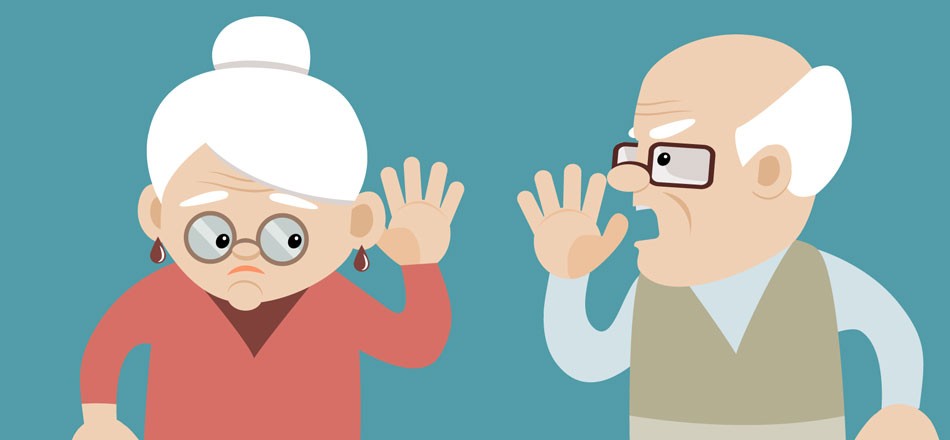
If exposure to noise is repeated and becomes permanent, the temporary loss turns into a permanent loss. This loss occurs not as a result of fatigue of the auditory system but as a result of destruction of the hair cells of the organ of Corti (the hearing organ), and it is often not followed by recovery. To determine the actual amount of hearing loss, an audiometry (hearing) test must be performed. Permanent hearing loss due to noise mostly begins at the frequency of 4,000 Hz, and its extent varies depending on various individual and environmental factors. Important individual characteristics include: age, work history, race, nutrition, diseases, poisoning with carbon monoxide, mercury, phosphorus, lead, and certain drugs such as streptomycin, salicylate, and gentamicin can also intensify the effect of noise on the auditory system by causing hearing loss. Because the loss begins in regions around 4,000 Hz, the person at first does not notice their hearing reduction. They may even mistakenly state that they have become accustomed to the noise of their workplace. It should be noted that the auditory system is never able to adapt to noise. A person notices their hearing loss when limitations arise in their conversation and social communication, and in such a condition they have developed degrees of occupational deafness.
Characteristics of occupational deafness:
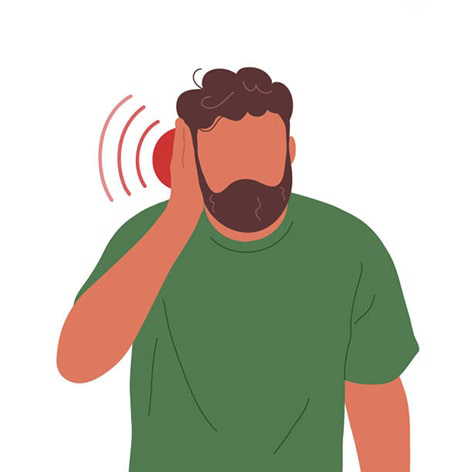
Being bilateral - loss in the conversational frequency range - untreatable - not identifiable by the person themselves at first - once established, it does not recover even with a change of job.
Acoustic trauma: This condition arises exclusively from a single exposure or several relative exposures to very high sound-pressure levels, such as the sound associated with explosions. As soon as one is exposed to this sound, which is beyond the tolerance of the auditory organ, mechanical damage such as rupture of the eardrum occurs. The results of this exposure are severe and require immediate medical attention.
Tinnitus: This condition occurs together with permanent hearing loss or acoustic trauma, and the person constantly feels a ringing in one or both ears such that tolerating it becomes very difficult and severely bothers the person even during rest hours and silence. This condition may even cause psychological complications as well.
Personal protective equipment: (earplugs and earmuffs) Personal protective equipment is the last resort for controlling noise. If this equipment is properly selected and used, it reduces the sound-pressure level considerably.
Comments
No comments yet.
To leave a comment, please sign in.