
A Healthy Life with Healthy Teeth
شکیلا بختیاریJune 19, 2023مقالات

Oral and dental health is an important part of public health that plays a significant role in people's health and quality of life. In our country, unfortunately, due to insufficient attention by parents and children to observing oral and dental hygiene, the rate of tooth decay is high. Therefore, in order to improve the health level of members of society, greater attention must be paid to oral and dental health.
• Facts about oral and dental hygiene
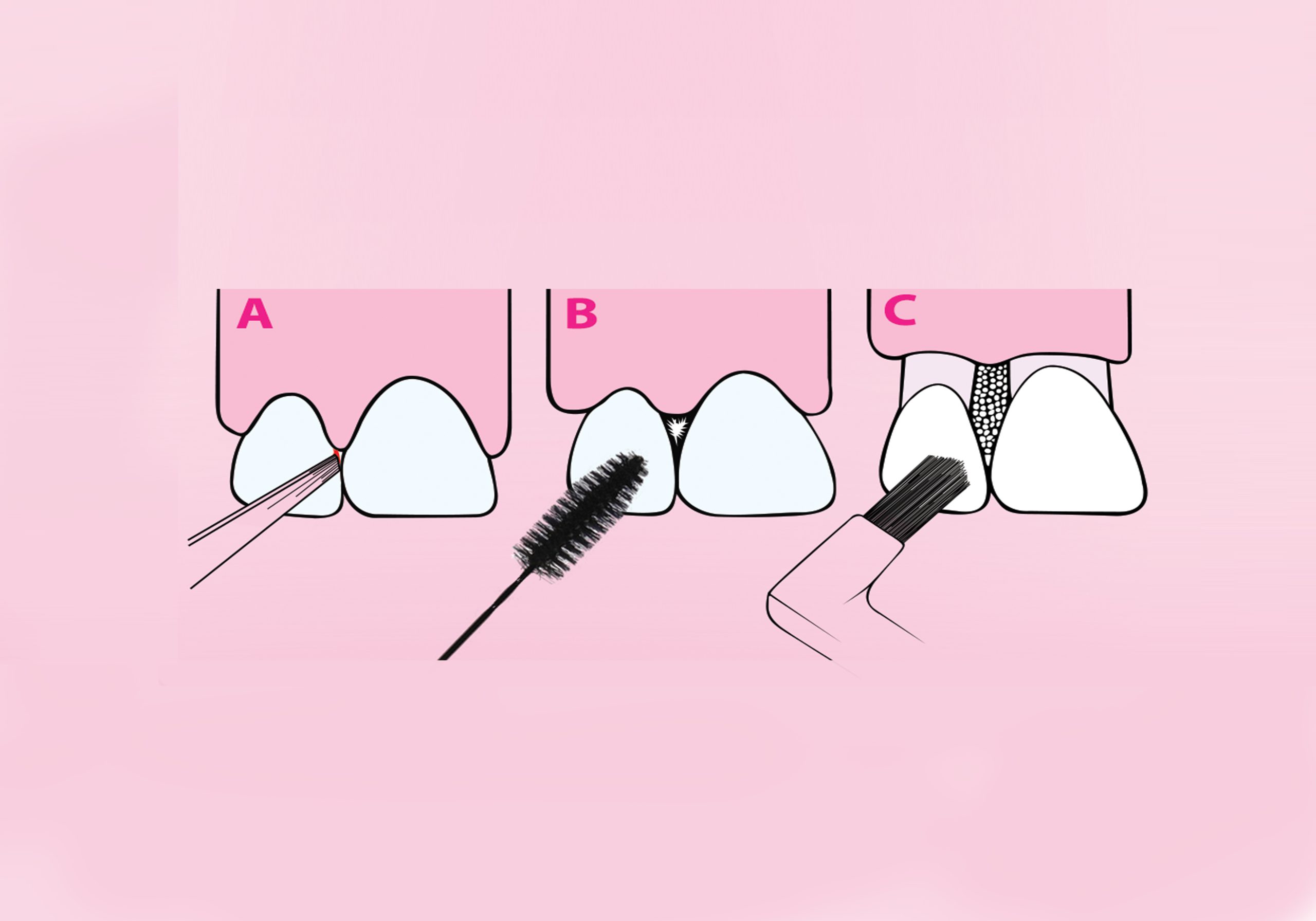
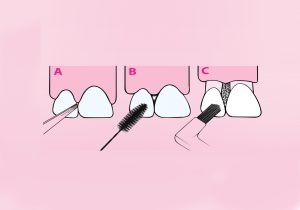 Brushing cannot clean the surfaces between the teeth; for this, special floss or special interdental brushes must be used.
1/ You should always use dental floss before brushing.
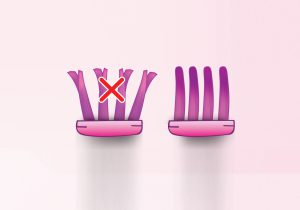
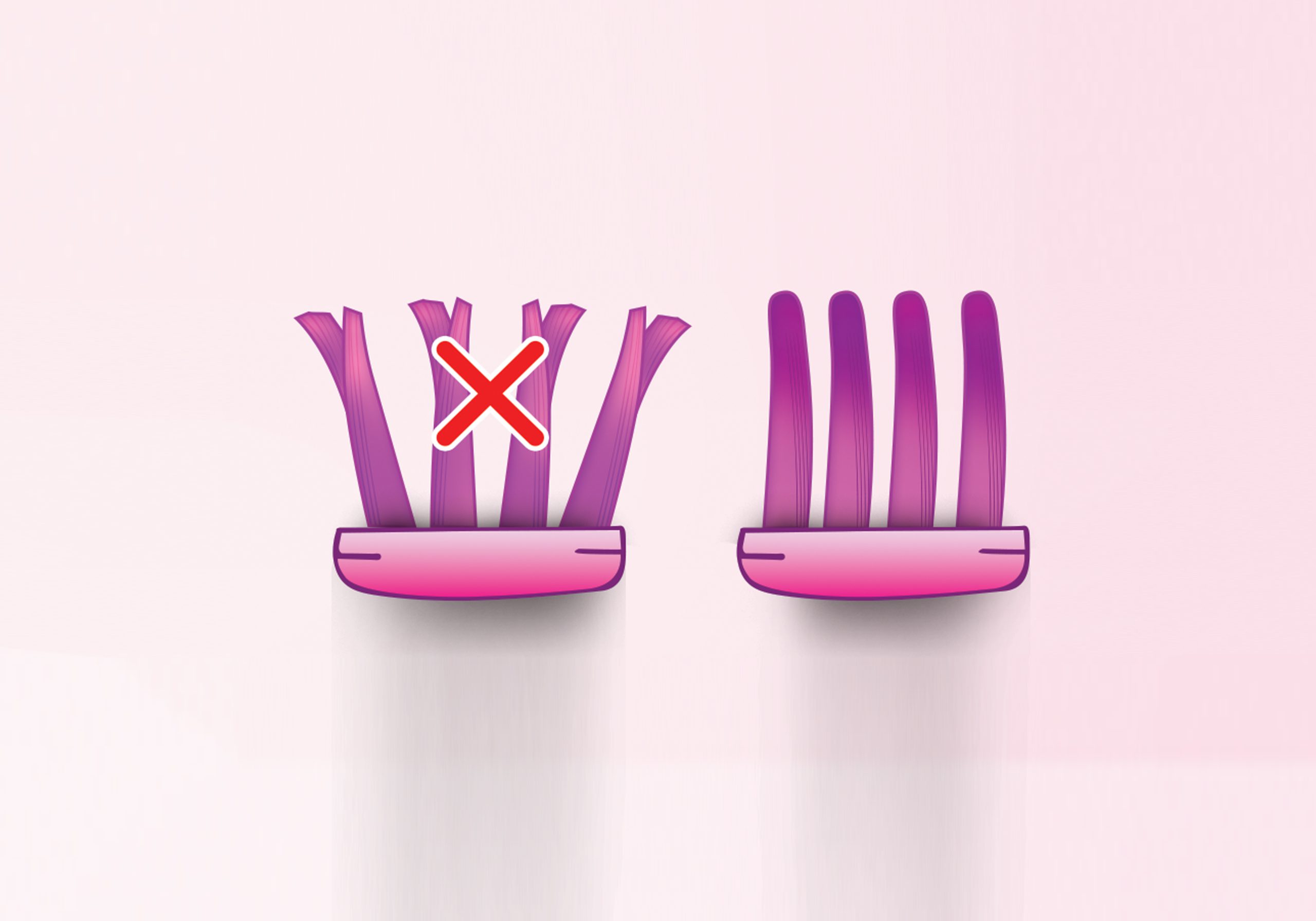
2/ The bristles of the toothbrush should be of equal length and not short and long.
3/ The bristles of the toothbrush should be soft to medium.
4/ Brushing should not be done with too much pressure.
5/ A toothbrush usually cannot be used for more than three or four months.
6/ Children's toothbrushes should be smaller than adults' toothbrushes.
7/ Brushing should be done on both the gums and the teeth.
8/ The upper and lower jaws should each be brushed separately.
9/ Using dry salt, baking soda, or whitening powders instead of correct brushing is not right and causes abrasion of the tooth enamel.
10/ Whenever the toothbrush bristles become bent and irregular or their color changes, the toothbrush must be replaced.
Remember that the goal of brushing is to remove food residue and microbes (microbial plaque) from all surfaces of the teeth and gums.
• The correct way to use dental floss:
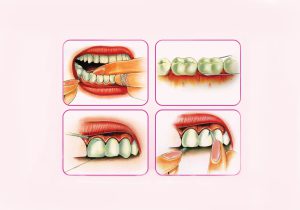
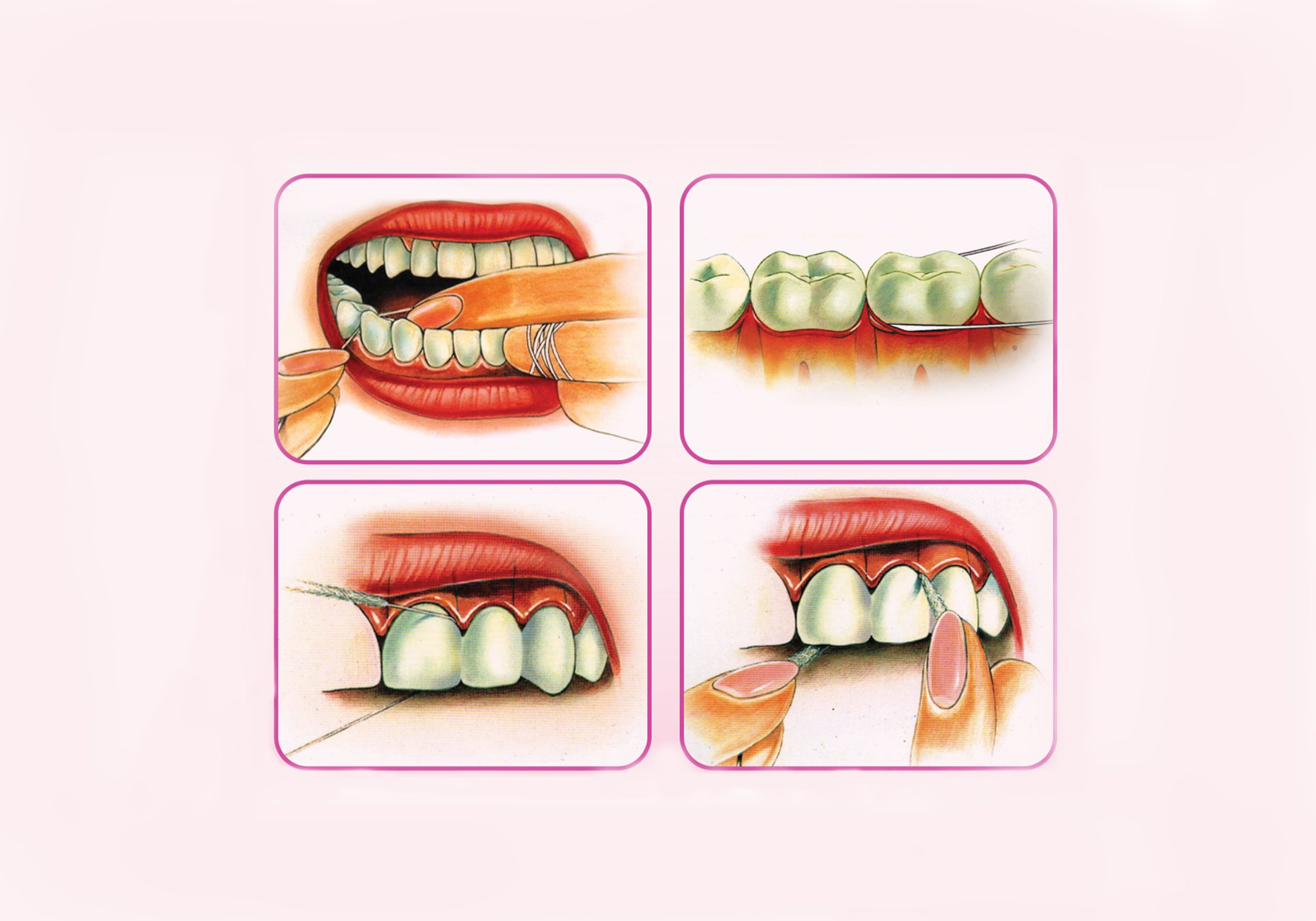
1/ Before using dental floss, wash your hands with soap and water.
2/ Cut about 35 centimeters of dental floss.
3/ Tie the two ends of the floss you have cut together (usually two knots) to form a loop.
4/ Hold the floss with the fingers of both hands as shown in the figure.
5/ Gently insert the floss into the space between the teeth with a sawing-like motion, and be careful not to injure the gum by pressing the floss.
6/ Press the floss against the side surface of one of the two adjacent teeth and gently move it under the gum as far as possible. Then pull it upward with pressure, and repeat this movement several times.
7/ Floss the interdental surface of the adjacent tooth in the same way.
8/ Rotate the floss slightly and, with the clean part of the floss, floss the surfaces between the other teeth as well.
9/ In the first sessions, it is better to practice flossing the teeth in front of a mirror.
10/ Brushing and flossing the teeth, in addition to creating healthy teeth and gums, also eliminates bad breath and cleanses the mouth, which is the path for reciting the Quran.
• The correct way to brush
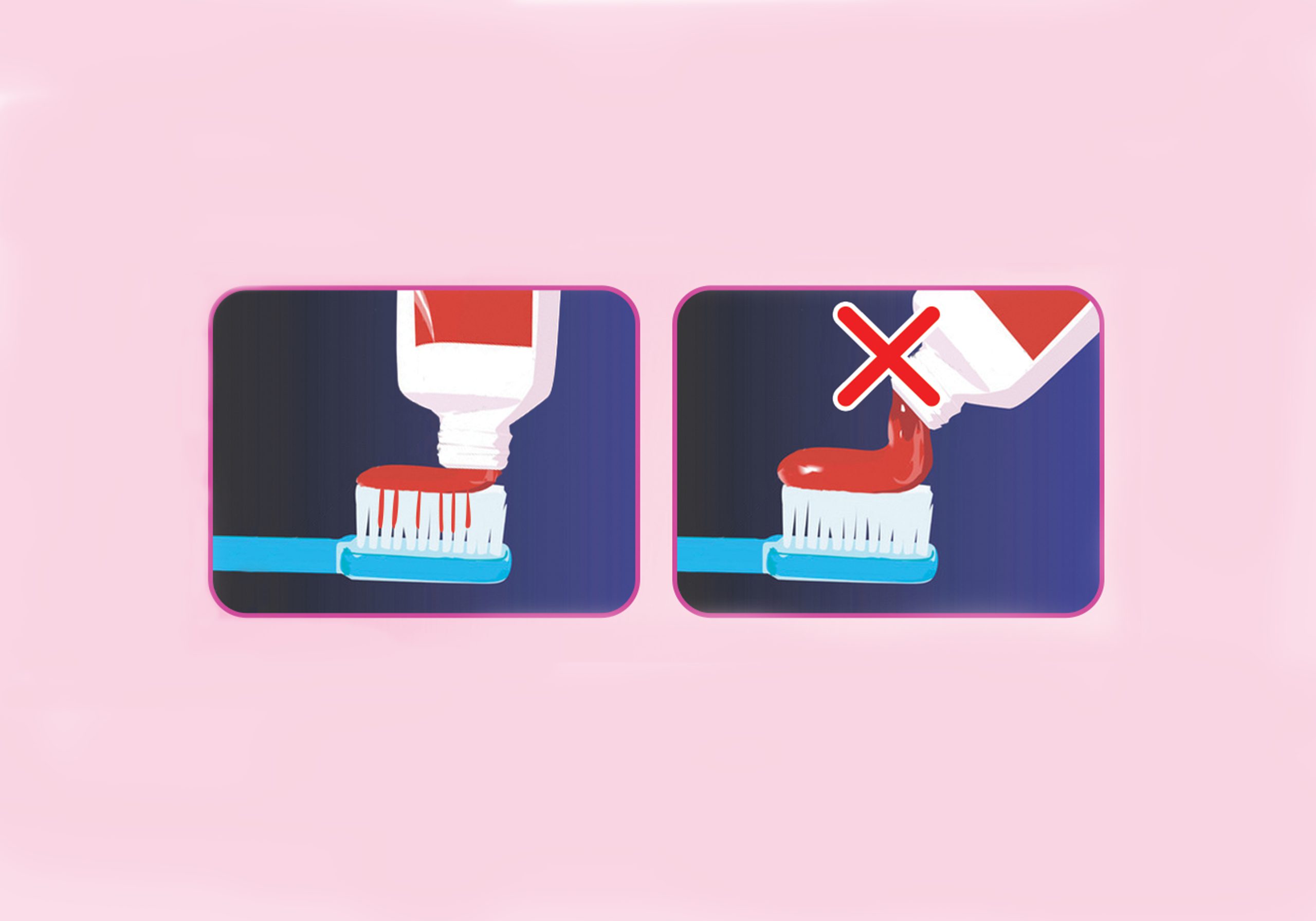
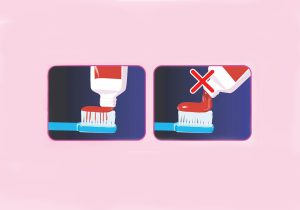 1/ Squeeze a pea-sized amount of fluoride toothpaste onto the toothbrush.
2/ Given the size of the brush head, divide the upper and lower jaw teeth into different sections (each time, try to have the brush fully cover two to three teeth) and perform 20 brushing strokes on each section according to the explanations a, b, c.
1/ Squeeze a pea-sized amount of fluoride toothpaste onto the toothbrush.
2/ Given the size of the brush head, divide the upper and lower jaw teeth into different sections (each time, try to have the brush fully cover two to three teeth) and perform 20 brushing strokes on each section according to the explanations a, b, c.
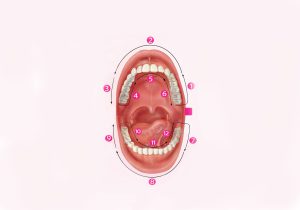
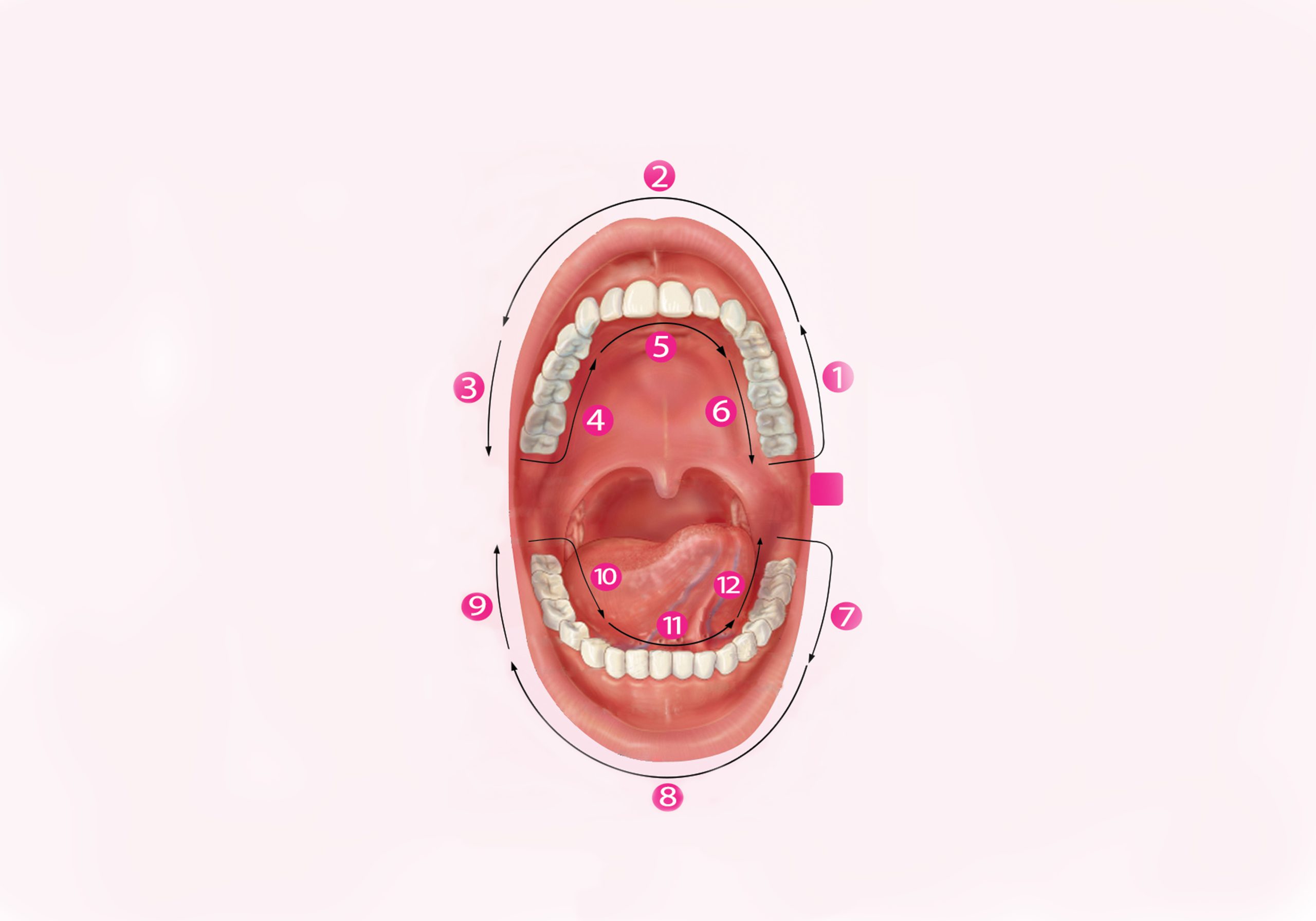
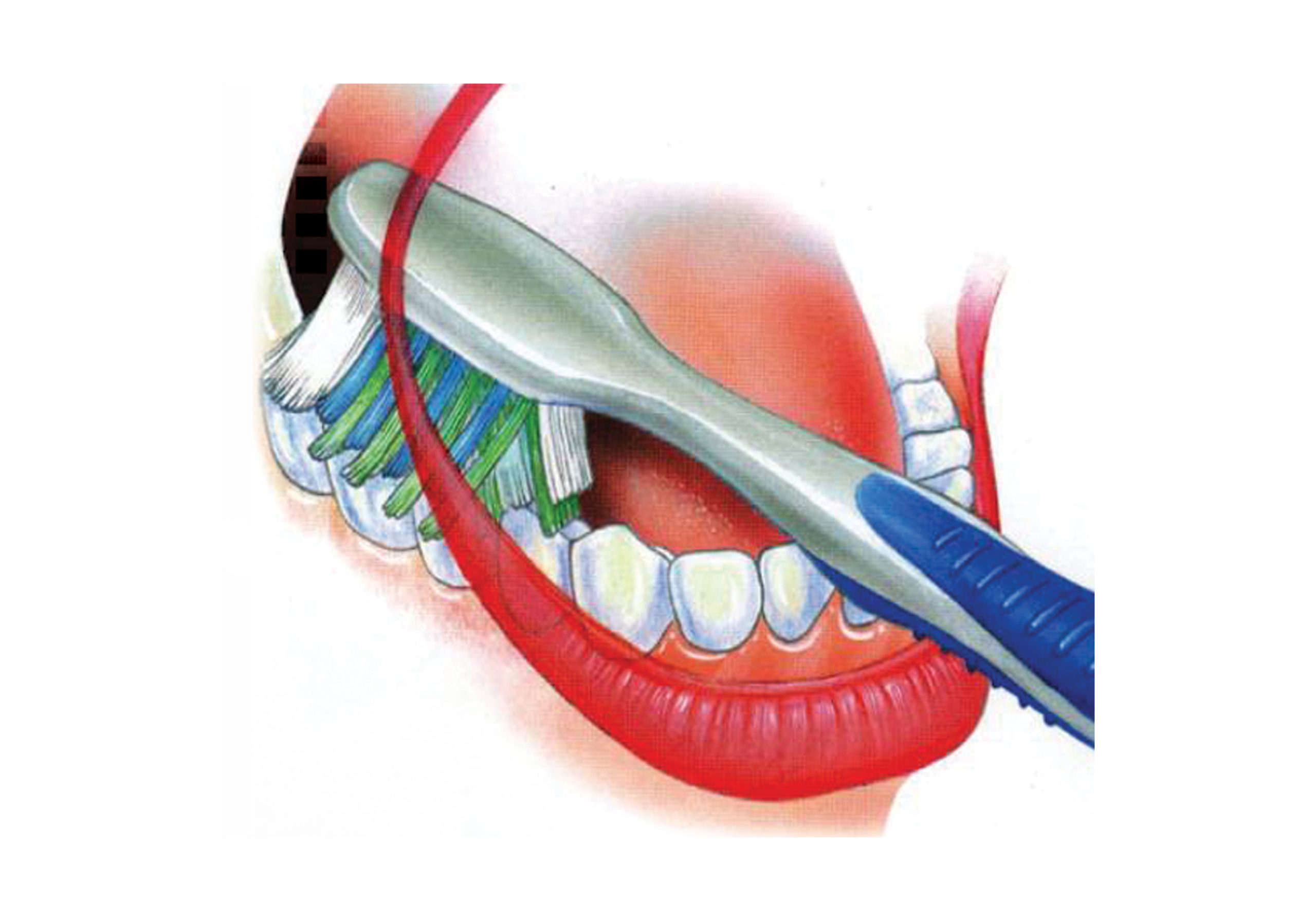
a) First, brush the outer surfaces of the teeth ten times in a sweeping motion from the gum toward the tooth (red to white). To do this, place the brush at an angle at the junction of the gum and tooth and brush until the gum and tooth are completely clean.
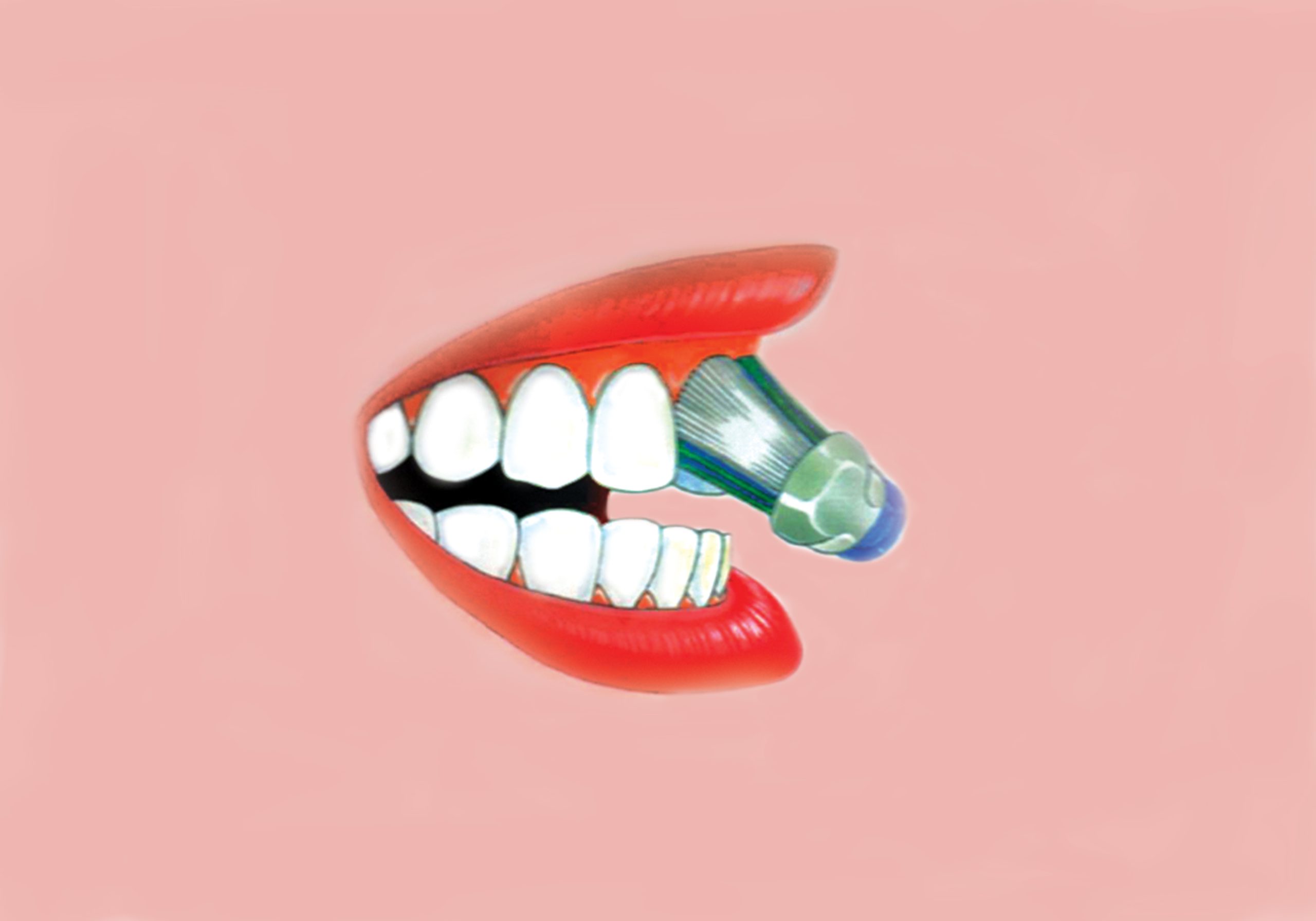
 Then brush the teeth again ten times with a gliding motion. To do this, place the brush on the tooth as shown in the figure; with this method, the grooves between the gum and tooth become completely clean.
Remember that the goal of brushing is to remove food residue and microbes (microbial plaque) from all surfaces of the teeth and gums.
b) The chewing surfaces of the teeth
 Clean the tooth with 20 back-and-forth strokes and a little pressure on the chewing surfaces as shown in the figure.
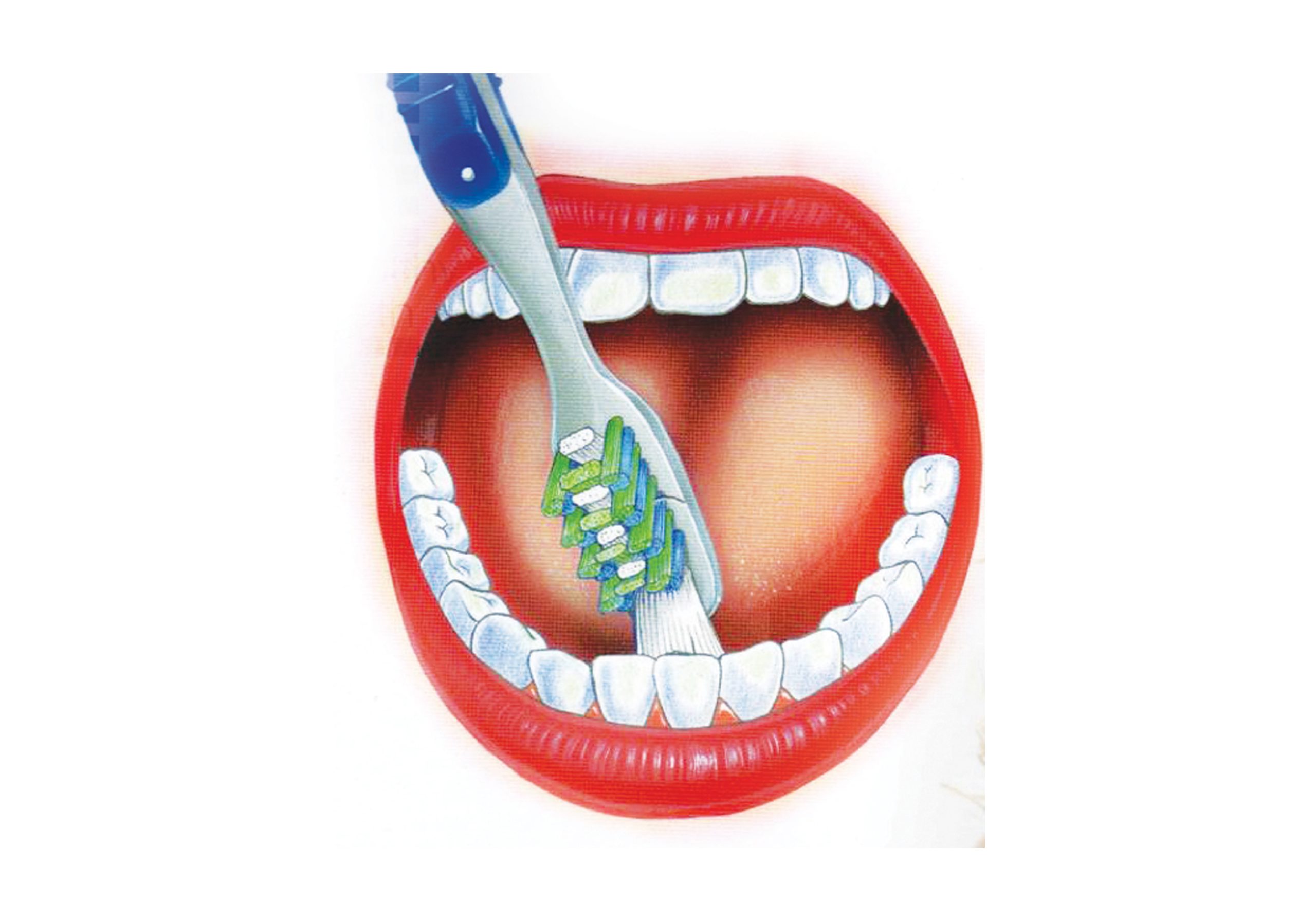
c) The inner surfaces of the front teeth
 With 20 back-and-forth strokes of the brush placed vertically on the gum and inner surface of the front teeth (as shown in the figure), clean the backs of the front teeth in the upper and lower jaws.
Comments
No comments yet.
To leave a comment, please sign in.