
A Simple Solution for Preventing Depression in Homemakers
صدف سخاییMarch 2, 2024اخبار
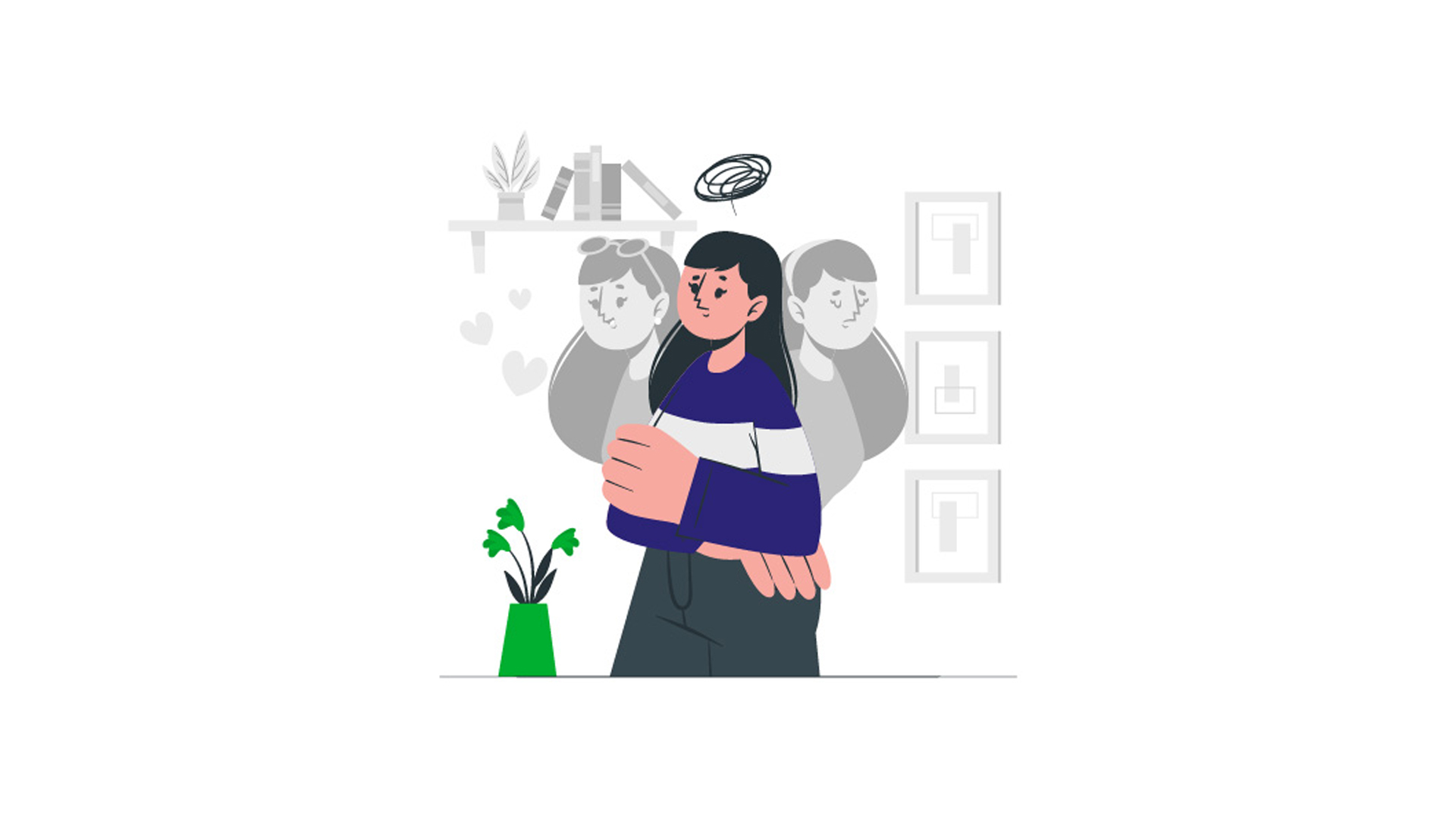
Almost everyone experiences depression during their life; if you are now in such a situation, the following strategies will help you overcome these feelings.
Depression is a kind of mood state that sometimes arises in a person as a result of not having a worthwhile job. No human is immune to depression and anxiety. Every person, in the course of their life, eventually tastes the bitter taste of deprivation, despair, disappointment, and grief, but this state can never be regarded as an illness; rather, it is in fact a kind of reaction to the unfortunate events of life. A gradual feeling of futility and weariness is also considered one of the factors that intensify this state, such that it creates a kind of chronic malaise that, at its most severe, makes continuing life impossible for the person and in some cases even leads to suicide. In this case, depression cannot be regarded as a mere state, but rather a kind of mental illness that also has no definitive cure, and its only treatment is in the hands of the patient themselves.
Housewives, because they spend most of their lives at home and reach a kind of mental fatigue by doing repetitive, everyday tasks, fall into the ranks of these people. Such women constantly complain of physical pains, while most of their everyday fatigue stems from mental states such as anger, weariness, the ingratitude of others, and a sense of futility about life; in fact, fatigue that is purely physical does not exist. Most of the above states can be observed in women who have recently begun their married life and do not have children, and who in fact have greater expectations of their young husbands than other women do.
Meanwhile, in today's Iranian society, men, due to the disordered economic situation, spend more time outside the home and, to attain an ideal life, are forced to work two or three shifts a day, and this prolonged absence from home does the greatest harm to their wives and, in some cases, to their children. This very feeling that no attention is being paid to them gradually creates a depressive mood in them. But it is possible to fight this state. Treating depression will be possible only over time and with the endurance of patience and forbearance, and it is achieved only by the person themselves. In fact, the person must fight from within with themselves, and occupy their free time with other matters such as handicrafts and reading guidebooks, which have a valuable role. One can easily, with precise and orderly planning, rescue the course of life from a state of stagnation and monotony. For example, to counter the feeling of being neglected and unappreciated by your spouse, you can keep their good qualities in mind, or even note them on a piece of paper and post it somewhere in the house and review it over time. On the other hand, you can talk to yourself every day and let thoughts such as joy, strength, and calm into your mind, and not allow monotony and weariness to cast the dust of sorrow over your life.
Do nothing
In this way: at least once a day, sit quietly for five or ten minutes and do nothing. Focus on the surrounding sounds, your feelings, and any tension in your neck, shoulders, arms, chest, and so on.
Robin Gueth, the founder and director of the Marin Stress Management Center, says: "This is one of the most difficult things for most people, because we have become deeply accustomed to thinking about the value of the things we do. Doing nothing is a real battle." Sitting, on its own, lowers the heart rate and brings down blood pressure—that is, it counters two of the most evident effects of stress. It also changes your perspective and increases your sense of control over situations. James Carmody, a physiologist and director of research at the Center for Mindfulness at the University of Massachusetts, says: "Studies show that the most stressful situations are the ones we cannot control. We cannot change the past, nor can we predict the future. The only thing each of us is able to control is the present." He continues:
"When people try this method in the program we offer, they regain their sense of control and reduce stress."
Laugh out loud
Always have something on hand to laugh about. This can be a collection of your favorite comedy clips, or the funny sounds that your child or a friend makes. You can even spend a few moments thinking about watching your favorite comedy series. Do one of these things often throughout the day.
Lee Berk, a researcher, says: "One of the most effective methods of reducing stress happens at night—that is, when you are watching your favorite series after a long day." Berk's research at Loma Linda University's School of Public Health in California shows that a good laugh lowers the level of cortisol and epinephrine, the stress hormones, and improves the body's defense system. In addition, the beneficial effects of a good, hearty laugh last for 24 hours. To recall it again, you can tell it to your friends too. Even waiting to laugh gives a person calm. In results reported last year, Berk and his colleagues found that telling volunteers that they would be watching a funny video in an experiment created greater cheerfulness in them and immediately reduced their stress level.
Listen to music
In this way: when you face a stressful task, listen to music—this music can be classical, traditional, or permissible. At work, too, you can use your computer's CD drive so that music is accessible to you.
In a study conducted at Monash University in Victoria, Australia, two groups of students were told to prepare an oral speech. Some worked in silence; others listened to a music collection. Stress increased the blood pressure and heart rate of those who worked in silence, but in the volunteers who were in the music group, the above values remained constant. They also stated that they felt less stress during the work.
Is there music that you should not listen to? The physiologist Alice Labbé says: "Many people think that they feel more relaxed with classical music, but this is not true for everyone."
The result of research on the relaxing effects of music in experiments at the University of South Alabama is as follows: "Our volunteers all chose selections from the traditional music group. What makes music give you a feeling of calm is that it helps reduce stress."
Think positively. In this way, think about a person or thing that you deeply love (anywhere) for 5 seconds to 5 minutes. Or imagine a scene from a peaceful vacation, or review in your mind a phrase that creates a positive feeling about yourself and the world around you.
It seems that thinking is like the advice on a greeting card! Happy thinking and calming thoughts can counter the physiological changes that occur when stress arises. Mr. Luskin, who researches the healing power of forgiveness, says: "Many of the stresses we experience stem from the negative feelings around us—hostilities, jealousies, angers, and emotional wounds." (He is the author of the book "Forgive for Good.") He continues: "Thinking about a person you are angry with—a boss who is foolish, or a friend who has hurt your feelings—can set harmful neurohormones flowing through your body's system, but thinking about people or things you love has the opposite effect."
Take a walk
In this way: get up from behind your desk or chair—wherever you are—and walk for 10 minutes. Many people have this inner sense that walking helps their calm. Today scientists are proving this. In research conducted at Stanford University School of Medicine in 2002, researchers focused on people who were caring for sick relatives. (This is a situation in which any of us, in these circumstances, also faces stress.) In this case, the scientists' research showed that people who walk 4 times a week have less stress and sleep more easily. The experiments also showed that the blood pressure of these people remains constant during stress.
Don't have an extra half hour? Don't overexert yourself. Five to ten minutes of walking can be useful at times of stress. Luskin, a physiologist at Stanford University, says: "Our research shows that the best method is to relax for a few minutes, or even for a few moments, when the level of stress is rising."
Take a deep breath
In this way: for five minutes, slow down your breathing and breathe about 6 times per minute. In other words, take 5 seconds to inhale and 5 seconds to exhale. We generally tend to breathe fast and shallow, especially when we feel pressure. A few deep breaths force you to stretch your shoulders and relax tight muscles. According to an international study in 2001, slow breathing also has other unpredictable benefits. Researchers have found that when people do yoga or are praying, their breathing decreases to a rhythm of 5 seconds inhaling and 5 seconds exhaling, which matches the ten-second periodic oscillation that naturally occurs in blood pressure. Synchronizing breathing with these actual cardiovascular rhythms causes the person not only to feel more relaxed, but also brings about an improvement in the health of the cardiovascular systems. If your day is full of small arguments and resentments, Gueth's suggestion to you is to place a white dot on your wristwatch or the clock on your desk. He points out that: "Whenever you see this white dot, take two or three long, deep breaths, and in this way you will be amazed at how quickly you feel calm." Rise calmly. In this way: just before leaving your bed and immediately after the alarm clock has gone off in the morning, spend 5 minutes calming your body. Start by tensing your toes, then deliberately relax them. Then do the same thing for the muscles of the soles of your feet, then the calf muscles, the thigh muscles, and the buttocks. Continue this method upward until you finally finish by tensing and then relaxing the facial muscles.
A stress specialist says: "If you begin your day with tension, things will be such that you feel tense all day. If you take your problems to bed with you, it will probably disrupt your sleep, and this means more tension. Research shows that people who are deprived of sleep have an increased level of stress hormones." He also says: "Begin and end each day by giving yourself one or two minutes of relaxation."
The method described above is an effective method called progressive relaxation. In a study conducted in 2002 at the University of Southern Mississippi, 46 volunteers who had been trained in progressive relaxation experienced a considerable drop in heart rate, stress, and the level of cortisol in their bodies.
Shelley Will says: "Most of the day, I'm running around. I don't want to begin my day this way. So, five minutes before I reach the brink of madness, I calm my mind. This is not always easy, but if it becomes part of your daily life, you won't feel good without it."
Comments
No comments yet.
To leave a comment, please sign in.