
Pediatric Dentistry
شکیلا بختیاریFebruary 1, 2023مقالات
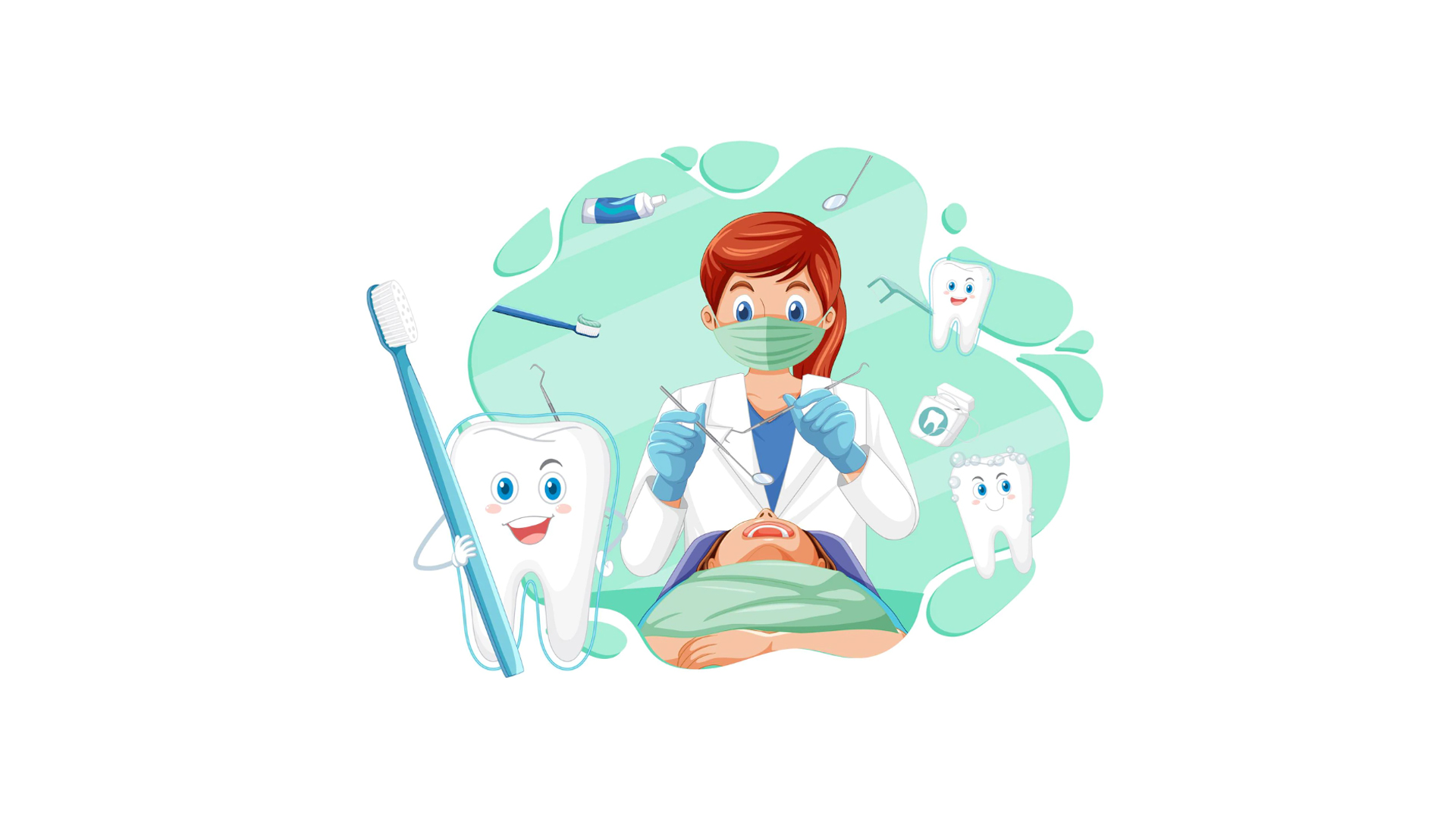
Healthy teeth are a very important factor in maintaining children's health, because children need these teeth for chewing food, speaking correctly, and having a beautiful smile. By studying this guide, which contains the answers to your most important questions, you can play a part in keeping your child's teeth healthy and maintaining their oral hygiene.
∴ The effect of the baby bottle on children's teeth One of the common causes of tooth decay is the use of the baby bottle, especially if used for a long time and at bedtime. It should be noted that breast milk, too, if left on the child's teeth, can cause tooth decay. If you have to give a baby bottle or breast milk or any other liquid, use a clean, damp cloth or gauze and, by pushing aside the child's lip, completely wipe the milk or fruit juice off the child's teeth. Never use the bottle as a pacifier, and never coat the pacifier tip with sugary substances such as sugar or honey. If possible, get your child used to using a cup to drink milk after the age of one.
∴ The time of shedding of children's milk teeth From around the age of 6, the shedding of milk teeth begins and continues until the age of 12 or 13. Note that these figures are only an average and may differ from child to child. One of the matters that worries parents is when a permanent tooth erupts before the milk tooth has fallen out. This particularly happens in the lower-jaw region. In such cases, do not worry, and for reassurance and peace of mind, consult a dentist so that, if deemed appropriate, they extract the milk tooth. One of the most important teeth of any person, namely the first permanent molar, erupts behind the last milk molar without any tooth becoming loose or falling out. This tooth erupts at around the age of 6; do not mistake it for a milk tooth.
∴ Methods for preventing tooth decay in children Most children need help and supervision when brushing until around the age of 8. Please pay attention to the following points when brushing your child's teeth: • Use fluoride-free toothpaste at least twice a day, in the mornings and at night before sleep. • When brushing, focus more on the chewing surfaces of the molars, where decay often begins. • To brush your child's teeth, use a toothbrush belonging to that same age group, designed especially for children. You can also benefit from electric toothbrushes, which are more attractive to children. Children's toothpastes are also preferable because they have various pleasant flavors.
∴ Do children need to use dental floss? When two adjacent teeth (whether milk or permanent) come into contact with each other, using dental floss is recommended. At first, this needs to be done by you so that over time the child gradually learns how to pass the floss between the teeth. The sooner you teach them to use dental floss, the more likely it is that this will become a habit and part of their daily life. Supervise your child's flossing at least until the age of 10. Note that the possibility of using dental floss becomes feasible for children aged 9 to 12.
∴ The effect of fluoride on children's teeth Tooth enamel is the hardest substance in the body, covering the outer surface of the tooth. Fluoride, which is naturally found in the body, can make tooth enamel stronger, and when visiting the dental clinic, based on your child's needs, the dentist may prescribe additional fluoride, in which case you must definitely act according to the dentist's instructions.
∴ What is a fissure sealant? By placing a fissure sealant, the dentist can help further prevent your child's tooth decay. A fissure sealant is a milky-colored or transparent material that fills the grooves of the chewing surface of the teeth, preventing the accumulation of food and microbes and consequently preventing tooth decay. This material is especially used for newly erupted permanent molars, and placing it on the tooth requires good cooperation from the child.
∴ Important actions when a tooth is knocked out of the jaw due to impact If the knocked-out tooth is permanent, do not rinse it under water at all and do not clean its surface with a tissue. Place it in cold milk or dilute saltwater and take your child to a dentist quickly.
∴ The role of nutrition in preventing tooth decay in children One of the methods of preventing decay is controlling the child's diet, and the formation of beneficial or harmful dietary habits in children is shaped by the parents. It is better to avoid eating foods that contain sugar, starch, and a large amount of fat, in which case, in addition to general health, the child's dental health will also be ensured. Reduce the number of times sugary substances are consumed during the day and choose snacks in a way that does not cause tooth decay.
∴ The effect of iron drops on children's teeth Iron drops do not cause tooth decay but cause discoloration of the teeth. To prevent such a problem for your child's teeth, there are easy solutions: • Lay the child on your lap and, using a dropper, • Drip the iron drops into the back of their throat so that they swallow it immediately and it does not come into contact with the teeth. • After giving the iron drops, you can also wipe the child's teeth with a piece of damp gauze to remove its residue from the teeth.
∴ Preparing children for a visit to the dentist • Never frighten your child with the dentist and do not present a dental visit as a means of punishing them, and do not use negative and frightening words such as the pain of injection, extraction, and drilling. • Since the dentist and the assistant will use a special term for each case, do not explain the details of the work steps to the child. • Do not make a promise to the child on the dentist's behalf, and do not allow others to recount instances of fear of the dentist for them. • Tell them that the doctor is their friend and cleans their teeth to help their health.
Healthy teeth protect your beloved child from contracting many infectious, digestive, and cardiovascular diseases.
Comments
No comments yet.
To leave a comment, please sign in.