
Microbial and Viral Hazards Related to Water
اسماعیلیJune 26, 2024اخبار

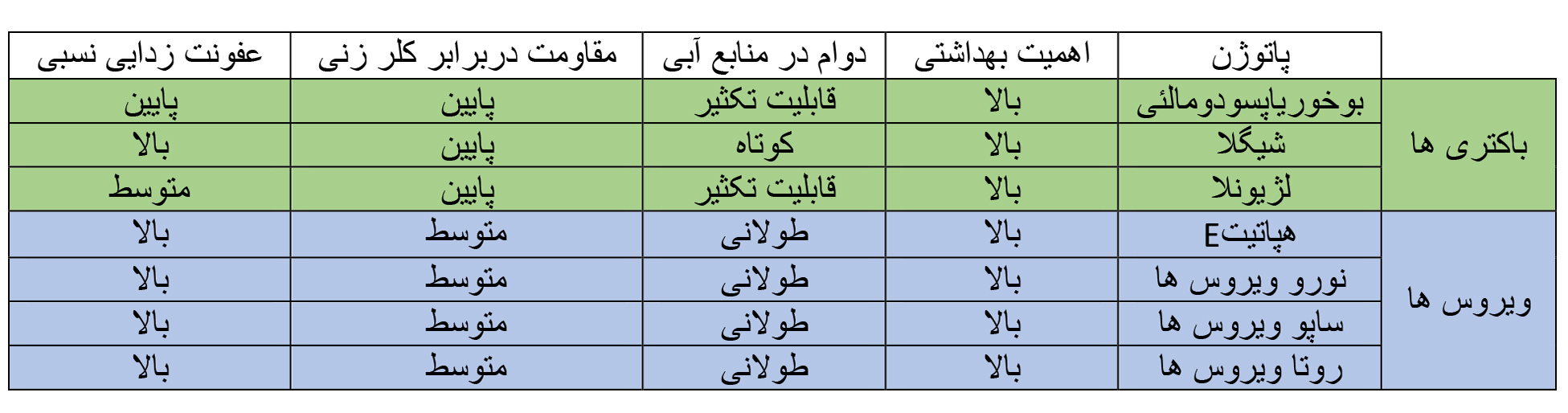
Infectious diseases caused by pathogenic bacteria, viruses, and parasites (such as parasitic worms) are the most common and widespread health hazards associated with drinking water. The pathogens transmitted through drinking water are very diverse. The table below lists a number of dangerous pathogens along with general information related to them
 The greatest danger related to the presence of microbes in water is associated with fecal contamination (whether human or animal). However, some organisms such as Legionella grow inside water-distribution pipes, and others, such as Guinea worm, grow in the water source and can cause disease, while still other microbes such as cyanobacteria require a special management approach.
Introduction to types of water-related diseases
1- Legionellosis: This disease, also known as Legionnaires' disease, develops through breathing air that contains tiny droplets of water.
2- Bilharzia (schistosomiasis): one of the parasitic diseases of tropical regions, caused when this parasite, in its larval stage, penetrates the person's skin. The spread of this disease occurs through contact with contaminated water.
3- Typhoid fever: a very dangerous and contagious disease. The bacterium that causes the disease (Salmonella) enters the body, passes through the lymphatic system into the bloodstream, produces a toxin in the body, and then enters the gallbladder, kidneys, and intestines.
Most of the agents that cause this type of disease lose their power and ability to cause infection after leaving their host's body, and then gradually die off. The breakdown of these microbes can occur faster at high temperatures. One of the factors that can, to some extent, affect the safety of water is sunlight and UV radiation, along with the heat produced by these two factors.
Finally, an outbreak of water-borne diseases can affect a large number of people in a community. Experience has shown that the systems for detecting outbreaks of water-borne diseases are deficient in many countries and lack the ability to assess them in a timely manner. Some of these diseases, such as typhoid, infectious hepatitis, cholera, shigella, and E. coli, can have severe effects or even result in death. Therefore, it can be concluded that the first priority of drinking-water quality control programs should be controlling outbreaks of such diseases.
Source: Book Water Quality and Treatment Methods
Publisher: Hak Publications - member of Tarfeh Holding
The greatest danger related to the presence of microbes in water is associated with fecal contamination (whether human or animal). However, some organisms such as Legionella grow inside water-distribution pipes, and others, such as Guinea worm, grow in the water source and can cause disease, while still other microbes such as cyanobacteria require a special management approach.
Introduction to types of water-related diseases
1- Legionellosis: This disease, also known as Legionnaires' disease, develops through breathing air that contains tiny droplets of water.
2- Bilharzia (schistosomiasis): one of the parasitic diseases of tropical regions, caused when this parasite, in its larval stage, penetrates the person's skin. The spread of this disease occurs through contact with contaminated water.
3- Typhoid fever: a very dangerous and contagious disease. The bacterium that causes the disease (Salmonella) enters the body, passes through the lymphatic system into the bloodstream, produces a toxin in the body, and then enters the gallbladder, kidneys, and intestines.
Most of the agents that cause this type of disease lose their power and ability to cause infection after leaving their host's body, and then gradually die off. The breakdown of these microbes can occur faster at high temperatures. One of the factors that can, to some extent, affect the safety of water is sunlight and UV radiation, along with the heat produced by these two factors.
Finally, an outbreak of water-borne diseases can affect a large number of people in a community. Experience has shown that the systems for detecting outbreaks of water-borne diseases are deficient in many countries and lack the ability to assess them in a timely manner. Some of these diseases, such as typhoid, infectious hepatitis, cholera, shigella, and E. coli, can have severe effects or even result in death. Therefore, it can be concluded that the first priority of drinking-water quality control programs should be controlling outbreaks of such diseases.
Source: Book Water Quality and Treatment Methods
Publisher: Hak Publications - member of Tarfeh Holding
The greatest danger related to the presence of microbes in water is associated with fecal contamination (whether human or animal). However, some organisms such as Legionella grow inside water-distribution pipes, and others, such as Guinea worm, grow in the water source and can cause disease, while still other microbes such as cyanobacteria require a special management approach.
Introduction to types of water-related diseases
1- Legionellosis: This disease, also known as Legionnaires' disease, develops through breathing air that contains tiny droplets of water.
2- Bilharzia (schistosomiasis): one of the parasitic diseases of tropical regions, caused when this parasite, in its larval stage, penetrates the person's skin. The spread of this disease occurs through contact with contaminated water.
3- Typhoid fever: a very dangerous and contagious disease. The bacterium that causes the disease (Salmonella) enters the body, passes through the lymphatic system into the bloodstream, produces a toxin in the body, and then enters the gallbladder, kidneys, and intestines.
Most of the agents that cause this type of disease lose their power and ability to cause infection after leaving their host's body, and then gradually die off. The breakdown of these microbes can occur faster at high temperatures. One of the factors that can, to some extent, affect the safety of water is sunlight and UV radiation, along with the heat produced by these two factors.
Finally, an outbreak of water-borne diseases can affect a large number of people in a community. Experience has shown that the systems for detecting outbreaks of water-borne diseases are deficient in many countries and lack the ability to assess them in a timely manner. Some of these diseases, such as typhoid, infectious hepatitis, cholera, shigella, and E. coli, can have severe effects or even result in death. Therefore, it can be concluded that the first priority of drinking-water quality control programs should be controlling outbreaks of such diseases.
Source: Book Water Quality and Treatment Methods
Publisher: Hak Publications - member of Tarfeh HoldingComments
No comments yet.
To leave a comment, please sign in.