
Ergonomics at Home
شکیلا بختیاریDecember 5, 2022مقالات
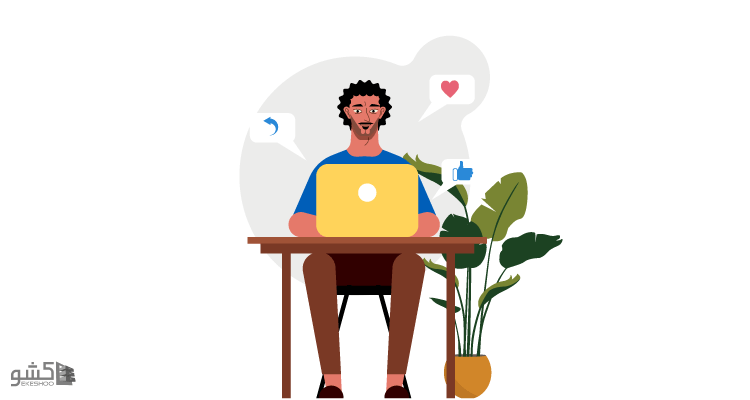
∴ What is ergonomics? Ergonomics is a science that deals with the relationship between humans, machines, and their surrounding environment, and proposes the design of the tools and devices used in such a way as to increase comfort, accessibility, safety, and efficiency, and reduce difficulty, danger, fatigue, and costs. Ergonomics is the science of studying human characteristics and features for the purpose of properly designing the work and living environment.
∴ The importance of ergonomics at home The importance of ergonomics at home: failure to observe ergonomic principles is one of the most important risk factors for the occurrence of musculoskeletal disorders. Statistics show that these complications are also increasing sharply among housewives. You probably know housewives among your acquaintances and relatives who constantly complain of pain in the neck, lower back, knees, and wrists and of numbness and stiffness of the limbs. The root of many of these complications goes back to failure to observe ergonomic principles in performing daily tasks. By observing some of the simple ergonomic principles mentioned below, the aforementioned disorders can be prevented or at least reduced. Manual carrying of loads: certainly a housewife, during the day for the household's daily shopping, has to carry loads. Ergonomics is a science that deals with the relationship between humans, machines, and their surrounding environment, and proposes the design of the tools and devices used in such a way as to increase comfort, accessibility, safety, and efficiency, and reduce difficulty, danger, fatigue, and costs. Ergonomics is the science of studying human characteristics and features for the purpose of properly designing the work and living environment. The importance of ergonomics at home: failure to observe ergonomic principles is one of the most important risk factors for the occurrence of musculoskeletal disorders. Statistics show that these complications are also increasing sharply among housewives. You probably know housewives among your acquaintances and relatives who constantly complain of pain in the neck, lower back, knees, and wrists and of numbness and stiffness of the limbs. The root of many of these complications goes back to failure to observe ergonomic principles in performing daily tasks. By observing some of the simple ergonomic principles mentioned below, the aforementioned disorders can be prevented or at least reduced.
∴ Manual carrying of loads Certainly a housewife, during the day, has to carry loads by hand for the household's daily shopping, and sometimes a large volume of daily shopping is carried by hand over a long distance. Moving household furniture, carrying heavy dishes full of food, etc., are among the cases that can affect people's health. Observing the following points can be helpful: Use a shopping cart for daily shopping. When using a cart, move it by pushing (not pulling) it in front of your body. When lifting children or any other item from the ground, keep your back straight, bend your knees, and get as close as possible to the load in question. If you have to carry children over long distances, using a "special baby carrier" distributes the applied pressure across the whole torso and reduces the occurrence of back pain. Get help from others to transport and move heavy household furniture. Avoid bending and twisting your back to the sides; this position is the worst possible state for the spine and puts very high pressure on the lower-back region.
∴ Ergonomic body positions in daily tasks
- The correct way to stand:
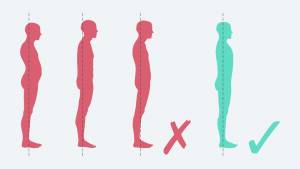
1/ Try not to stand in one position for a long time. But whenever you have to do so, try to keep one foot up by placing it on a box or stool, and after a while swap the raised foot with the other foot. 2/ When standing, distribute your weight over both feet and apply most of your weight to the ball of your foot rather than the heel; it is better to spread your feet shoulder-width apart as well. 3/ Wear comfortable low-heeled shoes.
- The correct way to walk:
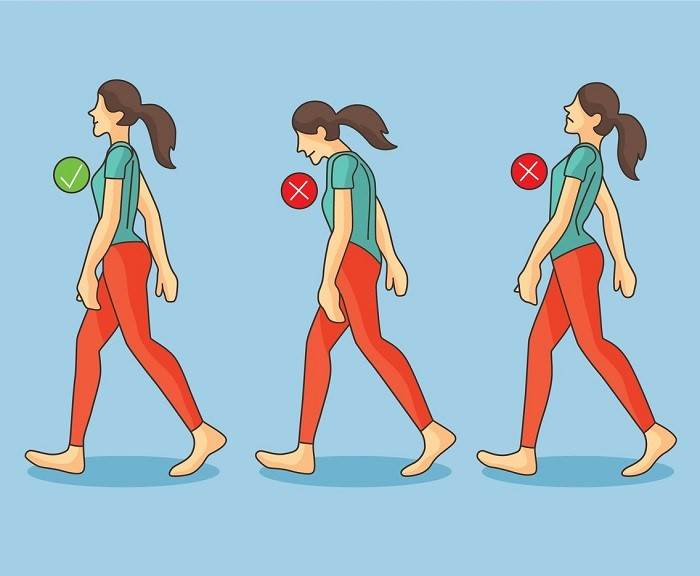
 1/ Keep your head up and look straight ahead with your eyes.
2/ Keep your shoulders in line with the rest of your body.
3/ Do not disrupt the natural movement of the arms while walking.
4/ Keep your feet in line and parallel to each other and do not turn them outward.
1/ Keep your head up and look straight ahead with your eyes.
2/ Keep your shoulders in line with the rest of your body.
3/ Do not disrupt the natural movement of the arms while walking.
4/ Keep your feet in line and parallel to each other and do not turn them outward.
- The correct way to sit:
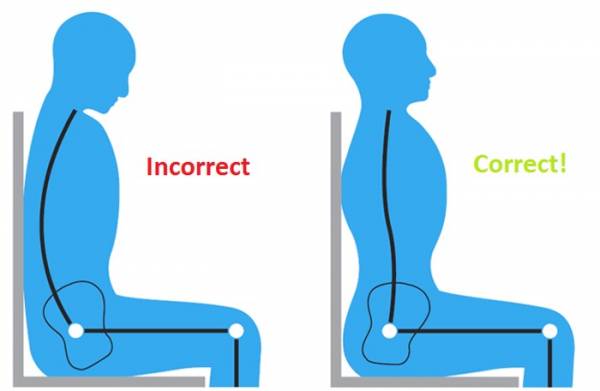
1/ Distribute your body weight evenly over both sides of your buttocks. The knees should be level with the buttocks or higher; to do this you can use a footrest. The feet should not be placed on top of each other. 2/ Try not to sit in one position for more than 30 minutes. Stand up, do a few stretching movements, and then sit down again. 3/ When getting up from a seated position, move to the front of the chair and rise by straightening your legs. Avoid bending forward from the lower-back region. Then do a stretching movement, for example bend and straighten your back 10 times. 4/ As far as possible, avoid turning your neck to the sides, and instead turn your whole body in the desired direction.
When sitting at a computer desk, pay attention to the following points:
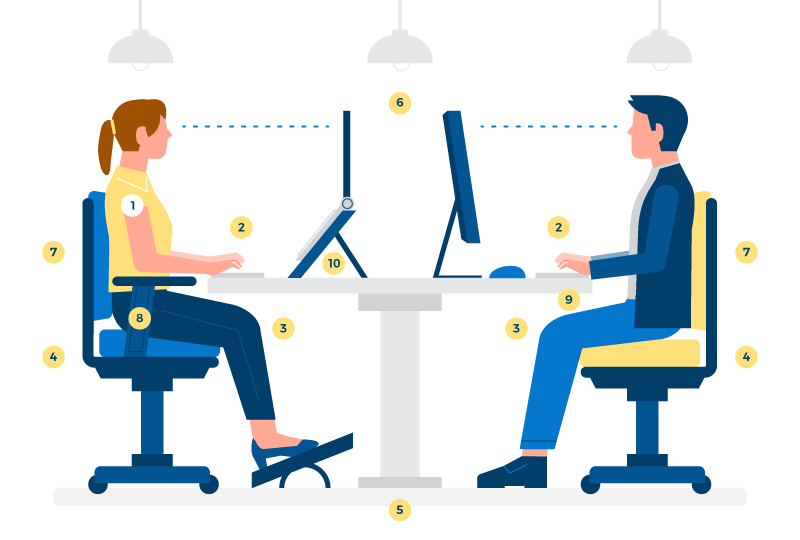
1/ The wrists should be straight and not bent up, down, or to the sides. 2/ The thigh should be parallel to the floor of the room. 3/ The elbow should be at a 90-degree angle. 4/ The knees should be 2 to 3 centimeters in front of the edge of the chair. 5/ The monitor should be 45 to 55 centimeters from the forehead. The top of the monitor should be in line with eye level. It is better for the keyboard to be placed 2 centimeters above the forearm and tilted slightly. 6/ A suitable mouse pad should be used.
∴ Resting at home
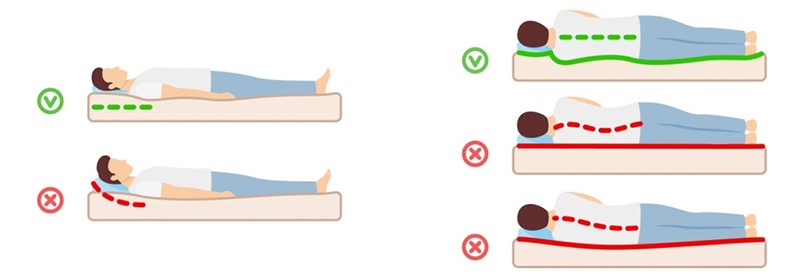
The sofa and couch you use for resting and reclining must have proper support for the lower back and neck. Its seating area should be soft and flexible and sink about 6 to 10 centimeters under the weight of the body. Its backrest should maintain the natural state of the spine (S-shaped). Its height should be such that it does not cause the legs to dangle. The arrangement of the sofa and the angle of the television should be such that you do not have to turn your back and neck to the sides or hold them up and down for long hours. For sleeping, use relatively firm mattresses of a suitable size, and use a pillow of suitable size so that the natural curve of the neck is maintained. The best sleeping position is lying on the back. Sleeping on the left side causes extra pressure on the heart, and sleeping on the stomach increases the curvature of the spine and also makes breathing difficult.
∴ Performing daily tasks
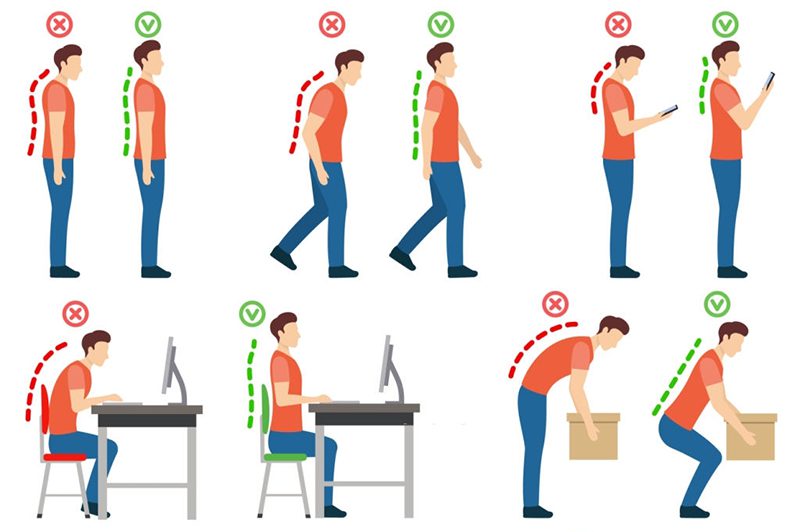
• When putting on trousers, use a chair to maintain body balance. • To put on shoes and socks, use a stool so that you do not have to bend your back much. Use a chair next to the telephone table so that you do not have to stand for a long time. • If possible, use sunlight. • When using a vacuum cleaner, adjust its handle so that you do not have to bend your back. Keep items used frequently on the upper shelf of the floor cabinet, items used less frequently on the lower shelf of the floor cabinet, and items rarely used in the wall cabinet. • As far as possible, avoid squatting and kneeling on the floor and use a suitable chair. • Performing some household tasks such as cleaning, cooking, and chopping vegetables and meat puts pressure on the wrist; in performing your tasks, try to keep the wrist from leaving its natural position and rest intermittently during work.
Comments
No comments yet.
To leave a comment, please sign in.