
Firefighting
صدف سخاییFebruary 12, 2024اخبار
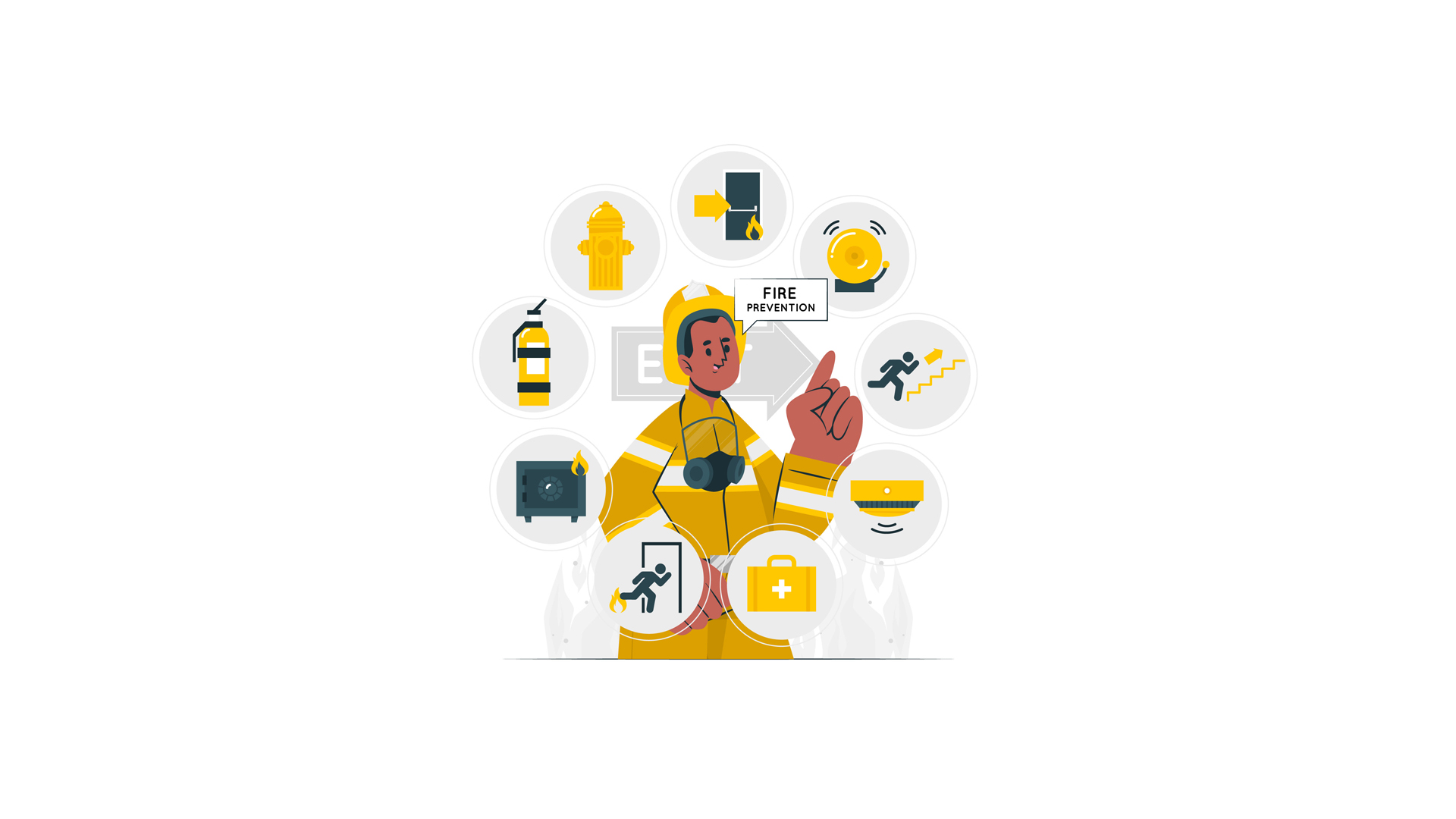
Fire is one of the oldest disasters, one that in a short period of time can endanger people's property and health. By definition, a fire is an unwanted, out-of-control chemical reaction that is usually accompanied by smoke, heat, and a great deal of light. In Iran, as in Europe and Australia, fire is divided into 6 groups designated by the letters A, B, C, D, E, and F, while in the United States and Japan it is classified into 5 groups: A, B, C, D, and K.
Class A fire:
This group includes solid materials that, when burning, are accompanied by the formation of glowing embers. The burning of materials including paper, cloth, wood, plastic, etc., falls into this group.
Class B fire:
This group includes flammable liquids such as petroleum products and vegetable oils.
Class C fire:
This group includes gases and liquids, or mixtures of them, that can easily turn into gas, such as town gas and liquefied gas.
Class D fire:
Some metals, including magnesium, sodium, potassium, and the like, burn when fire approaches them, and they fall into Class D.
Class E fire:
This group includes fires of electrical equipment, such as the burning of switchboard cables, electrical appliances, and computer systems.
Class F fire:
Cooking fats and oils, when they burn, fall into this group.
Fire extinguishers
Extinguishing each group of the fires described above must be done with the extinguisher specific to it, and sometimes using an unsuitable fire extinguisher can be dangerous.
In the event of a fire, you must first determine its group according to the burning material, and then use the fire extinguisher marked with the corresponding symbol to put it out. For example, to extinguish a fire of paper, cardboard, plastic, etc., you must use a fire extinguisher marked with the letter A.
Some fire extinguishers bear several different markings, such as A and B, which indicates that this extinguisher can be used to put out Class A and B fires. The person holding the fire extinguisher must keep a suitable distance (at least 3 meters) from the fire. Before moving toward the fire to control it, the person should check the condition of the extinguisher, pull out the safety pin, and test the discharge to make sure the extinguisher is working. Then, to confront the fire, they should move toward it and, with their back to the wind, begin extinguishing it.
How to correctly use an extinguisher to put out a fire
Keep your composure at all times.
In open spaces stand with your back to the wind, and in enclosed spaces stand in front of the entrance or exit door. Pull the safety pin from the handle of pressurized and CO2 cylinders out of its place.
Hold the nozzle of the cylinder's hose and aim it at the fire.
Target the base of the fire and extinguish it with a sweeping motion.
For internal-cartridge cylinders, pull the pin out of its place and, by striking the needle at the top of the cylinder's head, firmly hold the cylinder's hose nozzle and, by pressing the lever, aim the nozzle at the fire.
For side-cartridge cylinders, hold the hose nozzle lever, slowly open the side cartridge valve all the way, and, by pressing the lever, aim the nozzle at the fire.
All the cylinders currently on the market are made in a cylindrical shape according to their mechanism, and their discharge tube is fitted in the lower part inside the cylinder; therefore, the cylinder must always be used upright and standing. Otherwise, the gas or pressurizing agent will be discharged and the extinguishing material will not come out.
All powder-and-gas, water-and-gas, and some CO2 cylinders, from 1 to 250 kilograms, cannot be used a second time after any use in each stage, however small or little, and to recharge them they must be delivered to authorized dealers to be recharged.
Halon cylinders and some CO2 cylinders are exceptions to this rule.
Comments
No comments yet.
To leave a comment, please sign in.